How to Size Gutters for an Atlanta Roof
Start from the roof: how much drains to each run, how steep it is, and how hard Atlanta rain comes down. Then pick the gutter and the downspouts.
Bigger roofs and longer runs point to 6-inch
A 6-inch gutter with 3x4 downspouts is the safer choice for a large or steep roof, or a long run with a single outlet. A 5-inch can carry a smaller, lower roof when it has enough downspouts. Most of the decision is about the downspouts: how many, how big and where they go.
This is the same method the industry tables use, and the one to ask about on a measuring visit Decatur Spout sets up anywhere in metro Atlanta.
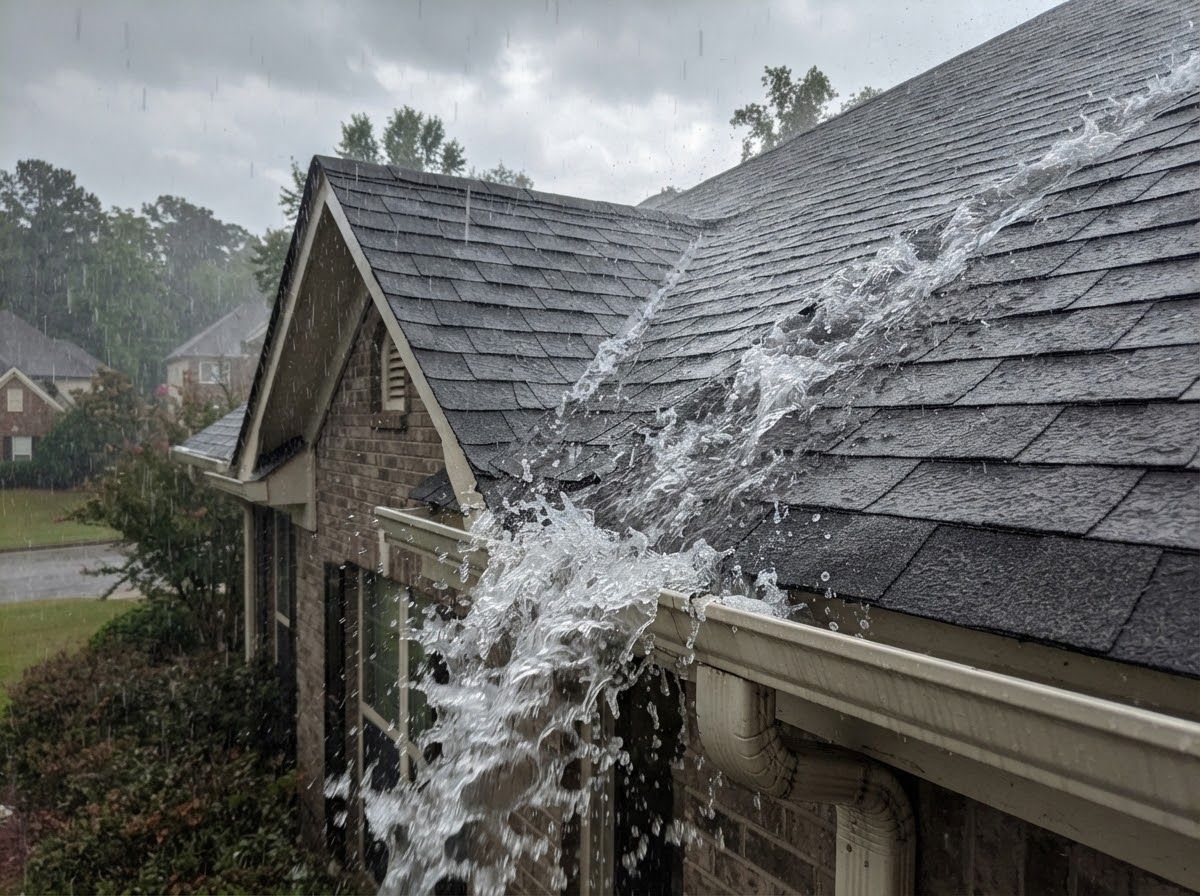
How hard Atlanta rain comes down
Gutter tables don't use yearly rainfall. They use the hardest five minutes of a storm, stated as inches per hour, and most size for a burst that comes about once in 10 years. NOAA's figures for downtown Atlanta are in the table; Decatur's are within a percent.
The Copper Development Association's sizing table, the one most gutter references follow, rounds Atlanta's 10-year burst to 7.3 inches an hour. NOAA's newer point estimate is a little higher, so treat the table's results as a floor, not a cushion.
| Storm that comes about | Rate over five minutes |
|---|---|
| Every 2 years, on average | 5.50 in/hr |
| Every 10 years | 7.76 in/hr |
| Every 25 years | 9.26 in/hr |
| Every 100 years | 11.7 in/hr |

| Roof pitch | Factor |
|---|---|
| Flat to 3 in 12 | 1.00 |
| 4 to 5 in 12 | 1.05 |
| 6 to 8 in 12 | 1.10 |
| 9 to 11 in 12 | 1.20 |
| 12 in 12 | 1.30 |
Roof area, adjusted for pitch
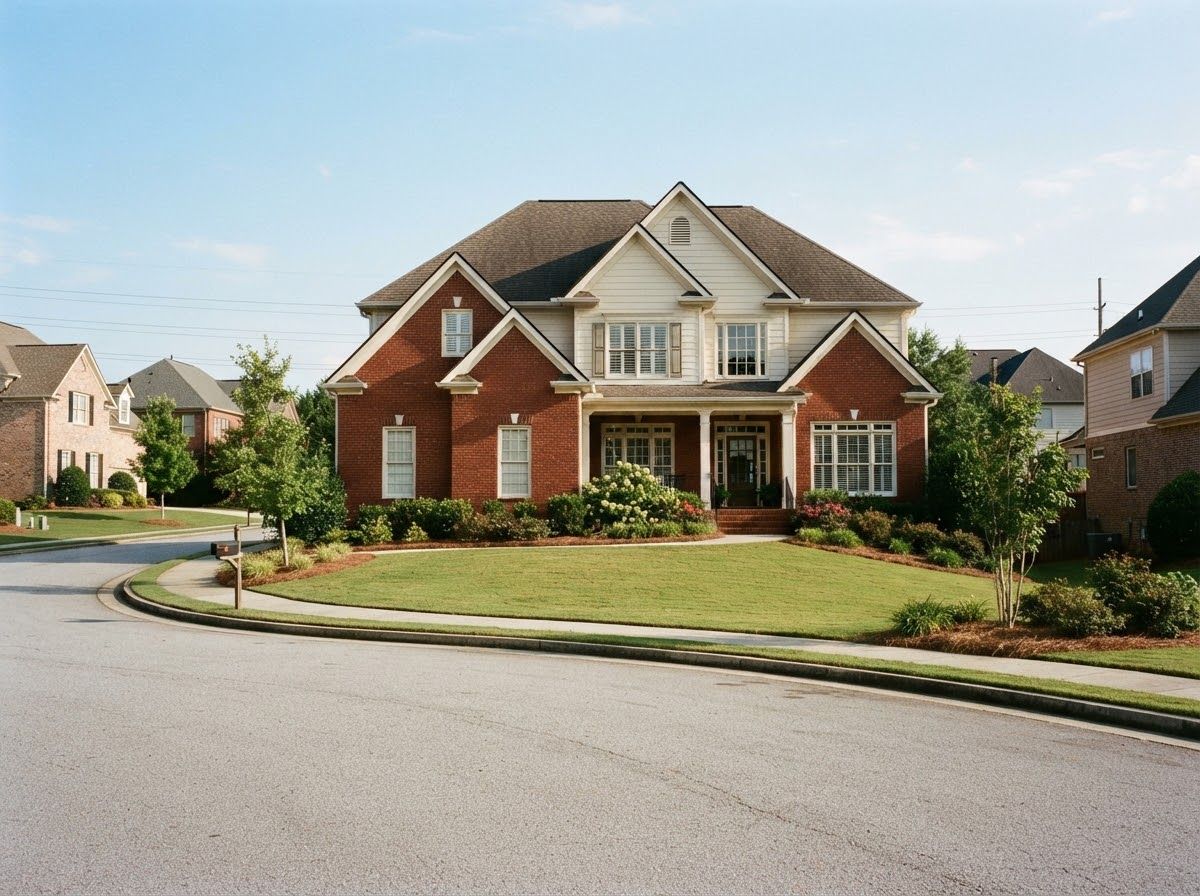
Start with the part of the roof that drains into one gutter, measured flat, the way it would look from a plane. A steeper roof catches more wind-driven rain, so the tables multiply that area by a pitch factor.
Say the back half of a roof measures 40 by 25 feet from above: 1,000 square feet. At a 6-in-12 pitch, multiply by 1.10, and that run has to handle 1,100 square feet. If a two-story wall sheds rain onto that roof, the plumbing code adds half the wall's area too.
How many downspouts a run needs
In Atlanta's 10-year burst, each square inch of downspout opening drains about 160 square feet of roof, by the Copper Development Association's table. Two other limits apply no matter what the math says: no more than 50 feet of gutter per downspout, and no water forced around a corner to reach one.
| Downspout | Opening | Roof it drains, 10-year burst | Roof it drains, 100-year burst |
|---|---|---|---|
| 2x3 rectangular | 6.00 sq in | about 960 sq ft | about 720 sq ft |
| 3x4 rectangular | 12.00 sq in | about 1,920 sq ft | about 1,440 sq ft |
| 3-inch round | 7.07 sq in | about 1,130 sq ft | about 850 sq ft |
| 4-inch round | 12.57 sq in | about 2,010 sq ft | about 1,510 sq ft |
Our math from the association's Atlanta factors (160 and 120 square feet per square inch), using design area after the pitch factor.
The same handbook recommends at least 7 square inches of opening for anything bigger than a porch roof, so a plain 2x3 falls just short. One maker's catalog pairs 6-inch gutters with 3x4 downspouts only, and the sheet-metal trade manual adds that a downspout should never be wider than the bottom of its gutter.
The 50-foot limit has its own reason: metal grows and shrinks with the heat, and very long runs to a single outlet strain the joints. On a long wall, that can mean an outlet at each end with the gutter sloping both ways from the middle.
What the extra inch of gutter buys
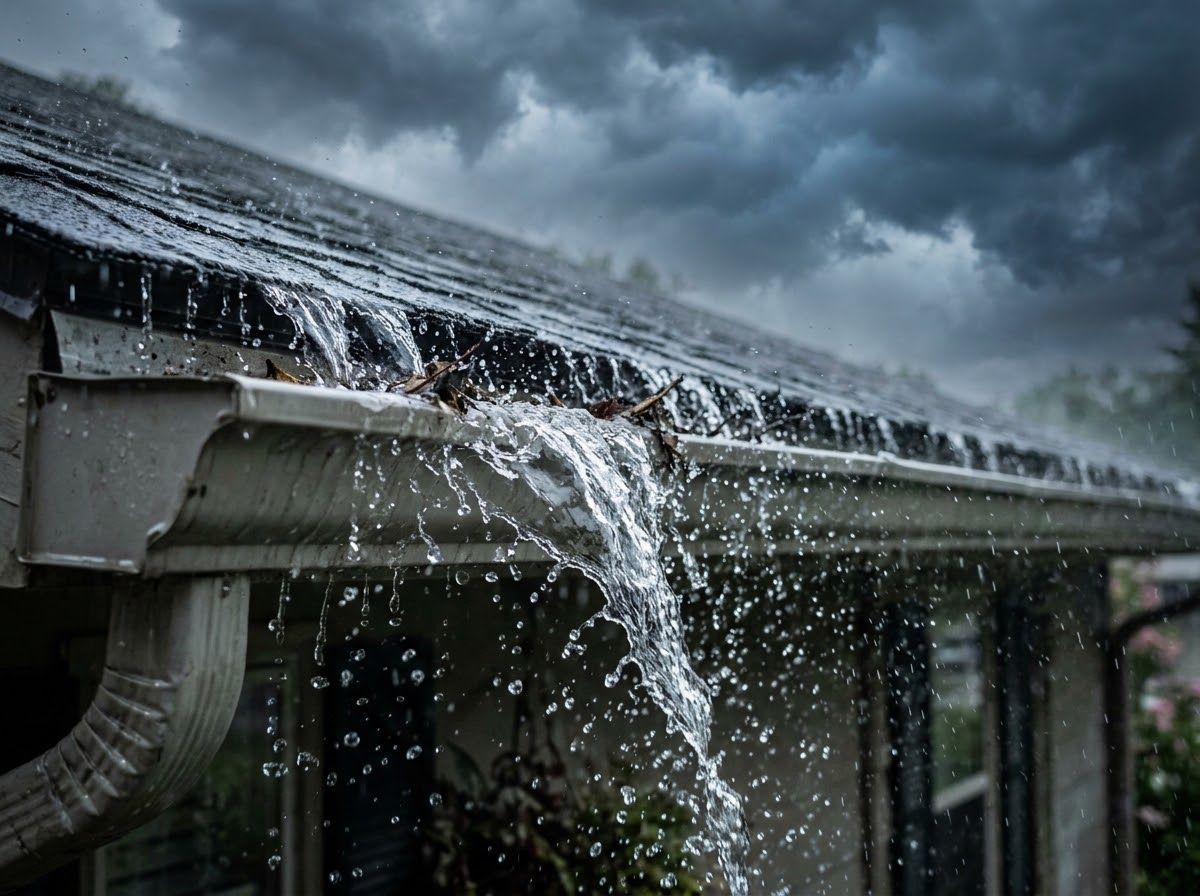
A 6-inch K-style gutter is rolled from 15-inch coil instead of 11-3/4-inch, about 28 percent more metal, and it holds that much more water before the front lip overtops.
The plumbing code's capacity table puts numbers on the jump for half-round: 74 gallons a minute for a 5-inch, 110 for a 6-inch, at a slope of 1/8 inch per foot. For scale, 1,000 square feet of roof in a 7.3-inch-an-hour burst sheds about 76 gallons a minute, already past the 5-inch half-round's rating and well inside the 6-inch's.
The code table doesn't list K-style profiles by name, so installers work from manufacturer charts for those, and some makers sell larger-capacity profiles that still look like a 5-inch from the street.
What the tables don't see
Numbers size a straight run on a simple roof. These are the spots an installer checks by eye.
Want the numbers run on your actual roof? That's the measuring visit.
Call {{TODO: phone}}Valleys
Where two roof planes meet, water pours into one corner. A small triangular dam under the front lip, or a downspout near the corner, keeps it from shooting past.
Guards on steep roofs
Fast water off a steep pitch can jump a guard. The guard comparison covers setting the angle.
Slope
A gutter sized right still spills if it sits level. The repair page gives the fall it needs.
Where the water goes next
A bigger gutter sends more water to each downspout, so the discharge has to keep up. See downspouts and drainage.
Questions about gutter size
Can I keep 5-inch gutters and add downspouts instead?
What size are standard house gutters?
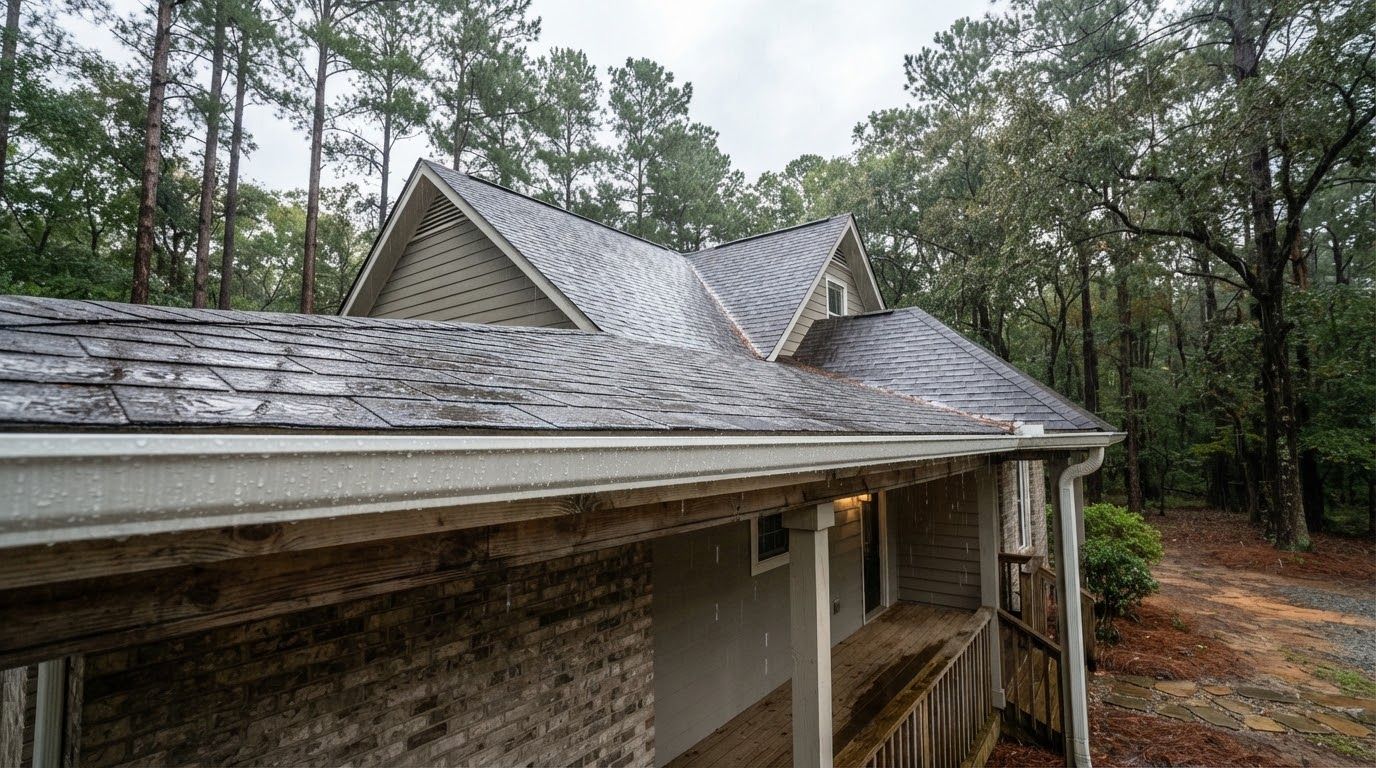
Give us the rough footprint of the house and how steep the roof looks, and the measuring visit fills in the rest.