Fascia Board and Soffit Repair in Atlanta, GA
Peeling paint or a soft spot behind the gutter usually means water is getting into the fascia board, so the repair starts there.
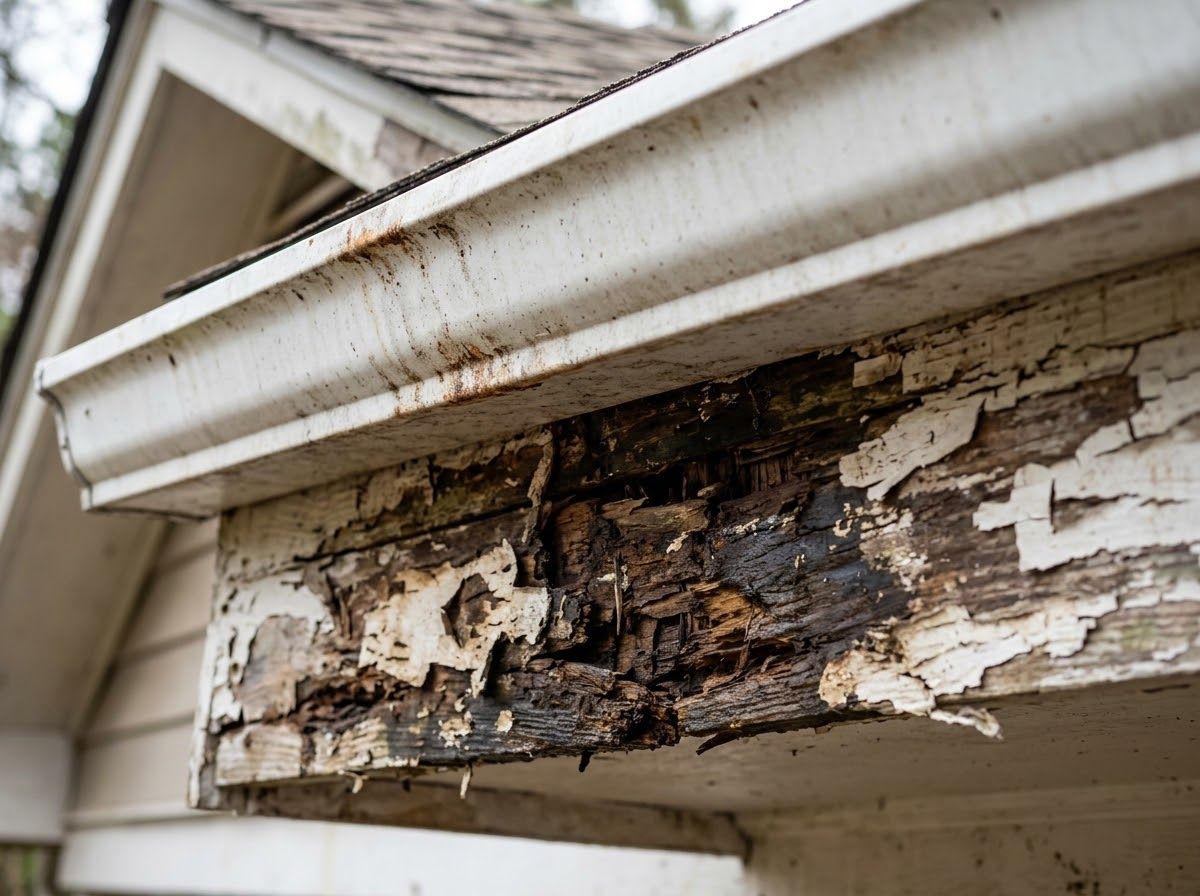
Rotted fascia behind the gutter
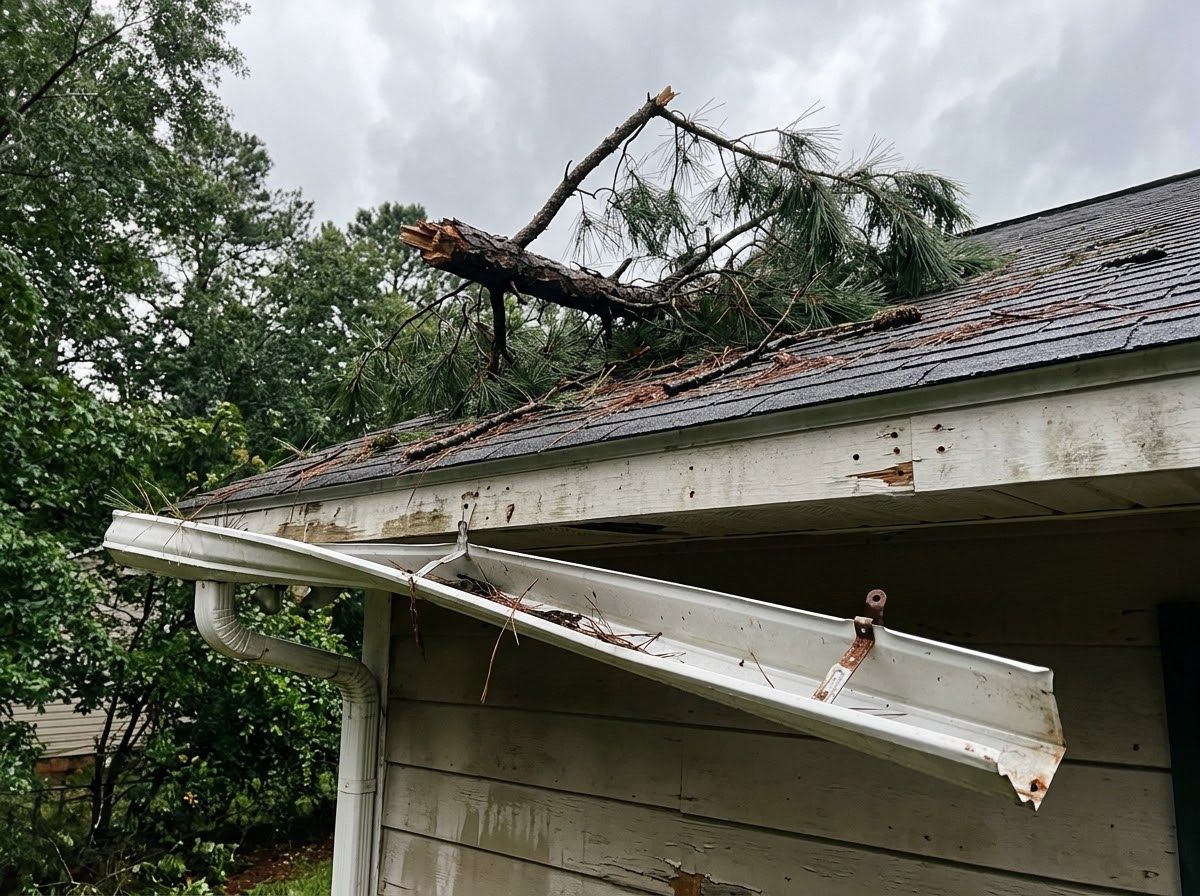
The fascia is the roof-edge board the gutter hangs on. It rots from the back and bottom, where water gets in and stays, so the face can look fine while the wood behind the gutter has gone soft.
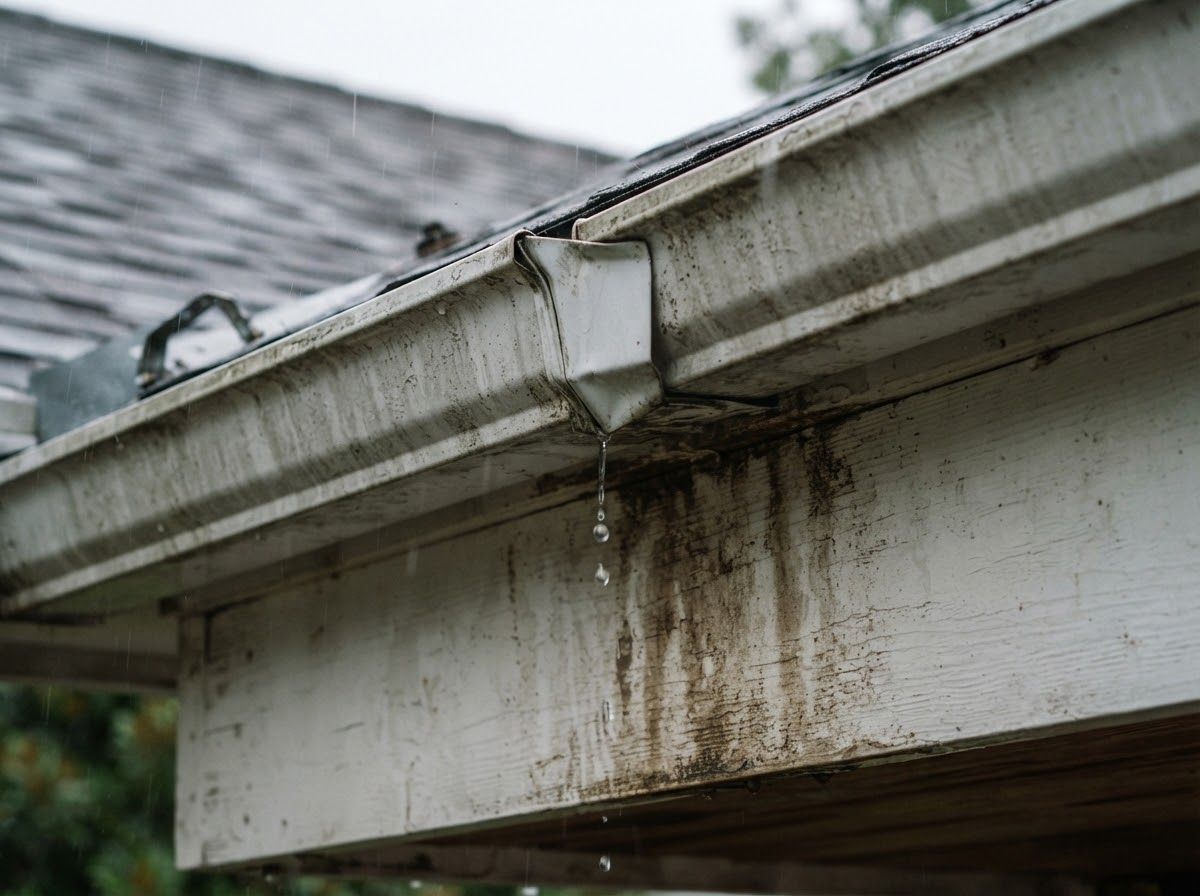
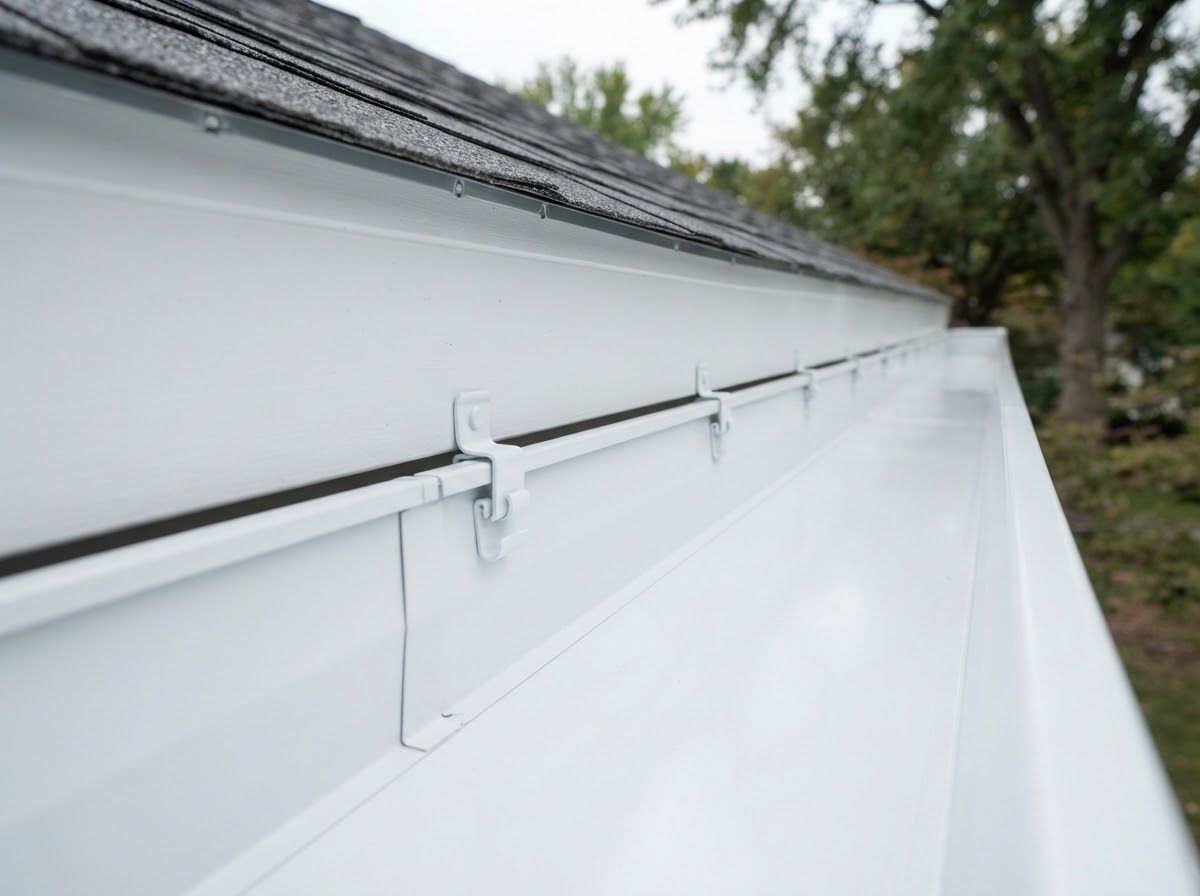
The drip edge, a bent metal strip along the roof edge, steers water into the gutter. The asphalt roofing industry says it limits rot where water gets under the shingle edge onto the deck and fascia, and Georgia's code requires it on shingle roofs. Where it's missing or too short, water runs down the back of the gutter onto the board. A gutter spilling over its back edge does the same, which is why the front edge should sit lower.
Decatur Spout arranges fascia and soffit repair alongside gutter replacement and repairs across metro Atlanta.
Why gutters can't hold on soft wood
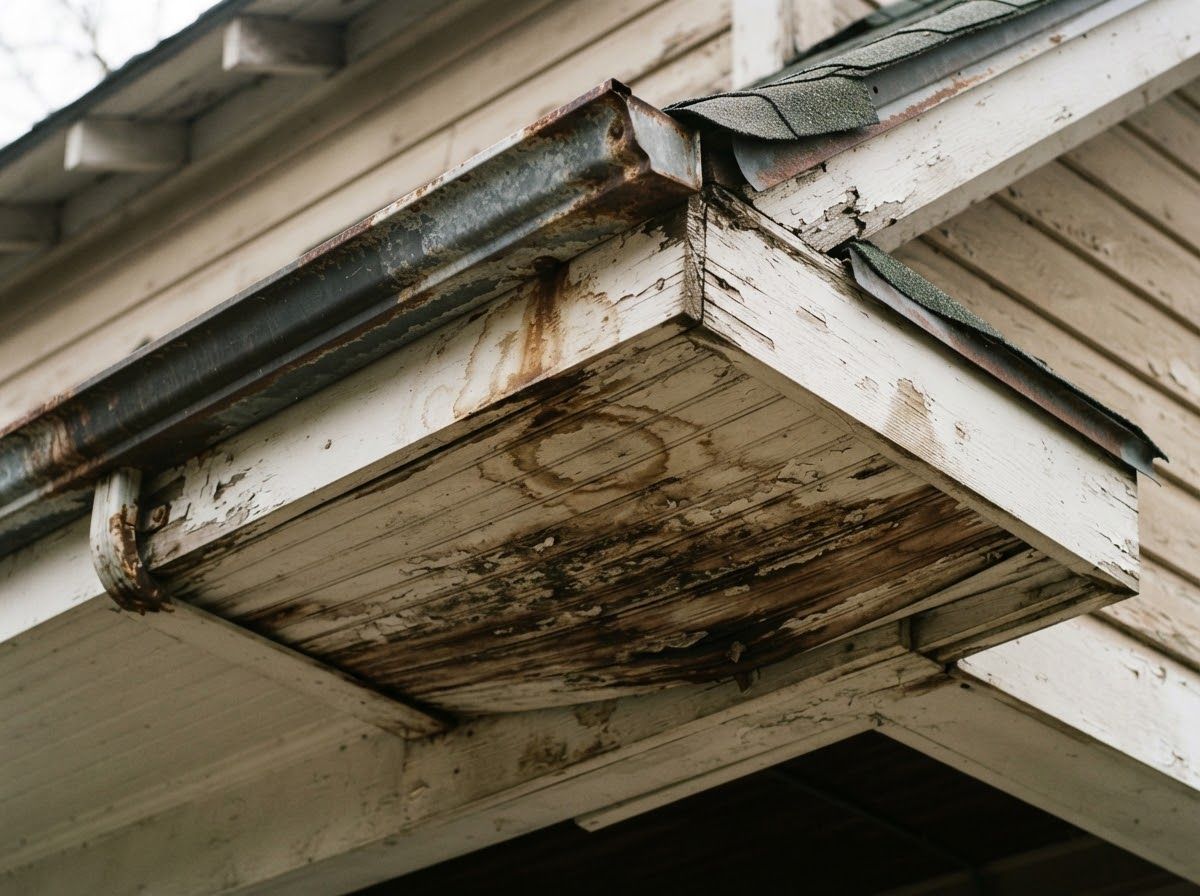
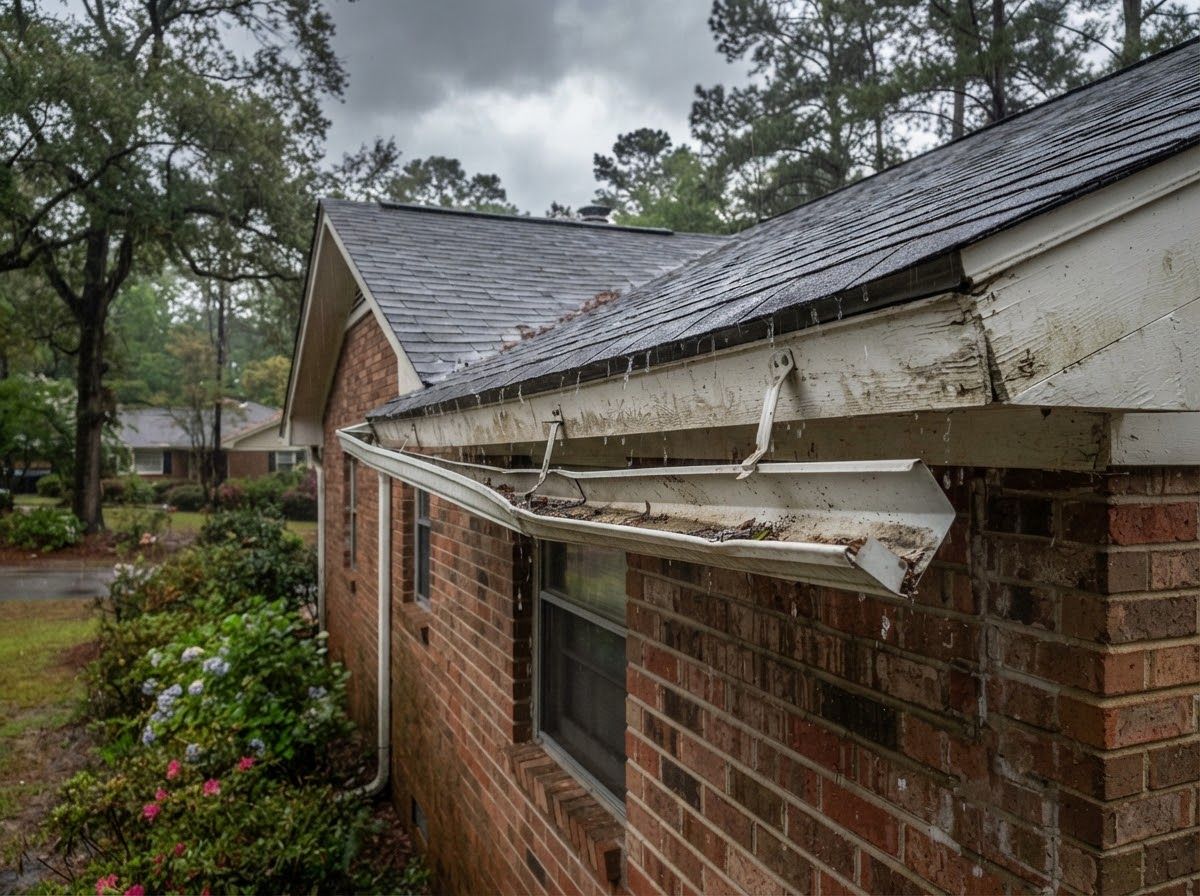
A gutter full of wet needles and rainwater is heavy, and all that weight hangs on the fasteners in the fascia. A screw holds in sound wood. In rotted wood the threads have nothing to grip, so the gutter leans out, sags, then pulls loose in a storm.
The soft board comes out, a primed or painted one goes up, and the gutter goes back on with new hangers. The gutter repair page covers the hangers, and the gutter cost guide shows what fascia work typically adds to a quote.
What the new board can be made of
- Primed and painted wood
- The original on most older houses. Every face needs paint, and carpenter bees go for old, unpainted pine. The builders' lifespan study gives exterior trim about 25 years.
- PVC trim board
- One major maker says cellular PVC resists rot and insects. It isn't load-bearing, so it goes over solid backing and the hangers still reach the wood behind it.
- Aluminum wrap over wood
- Roll-formed aluminum bent over the board and tucked under the shingles. It doesn't need paint, but it only covers the wood, so the board has to be sound first.
- Fiber cement
- The builders' study gives fiber-cement fascia 50 years. Its maker says it must never hold a gutter up, so hangers go through to the rafter tails or sheathing.
Critters getting in at the roof edge
Animals and insects get into the eave through gaps where the soffit meets the fascia, or through soft spots in either.
Scratching in the eave or sawdust on the porch floor is worth a call.
Call {{TODO: phone}}Squirrels
UGA Extension says squirrels gnaw through soffits and roof edges to reach attics, often where the siding meets the roof, and describes a pair squeezed under a gutter cover to nest. Hear them inside? The young stay in the nest 10 to 12 weeks, so the gap gets closed once they're out.
Carpenter bees
Georgia's most common carpenter bee bores round holes about 3/8 inch across into old, unpainted wood, and UGA Extension finds their holes along eaves, window trim and siding. They nest in March and April. Badly bored boards get replaced; lighter damage gets plugged and painted, and the Atlanta gutter calendar has the month to do it.
Woodpeckers
They break into bee-bored wood to get at the larvae, and UGA warns the digging can cause structural damage. Fixing the bee damage takes away what they're after.
Questions about fascia and soffits
Is the fascia replaced before the gutters are rehung?
How do I spot fascia rot from the ground?
A few minutes on the phone about where the paint peels or the gutter leans tells the installer which boards to test first.