Which Gutter Guard Is Best Under Atlanta Pines?
Design matters more than the brand. Here is how each type handles needles, tassels and a summer downpour, without a brand to push.
Micro-mesh, reverse-curve, screen, brush, foam: which works under pines
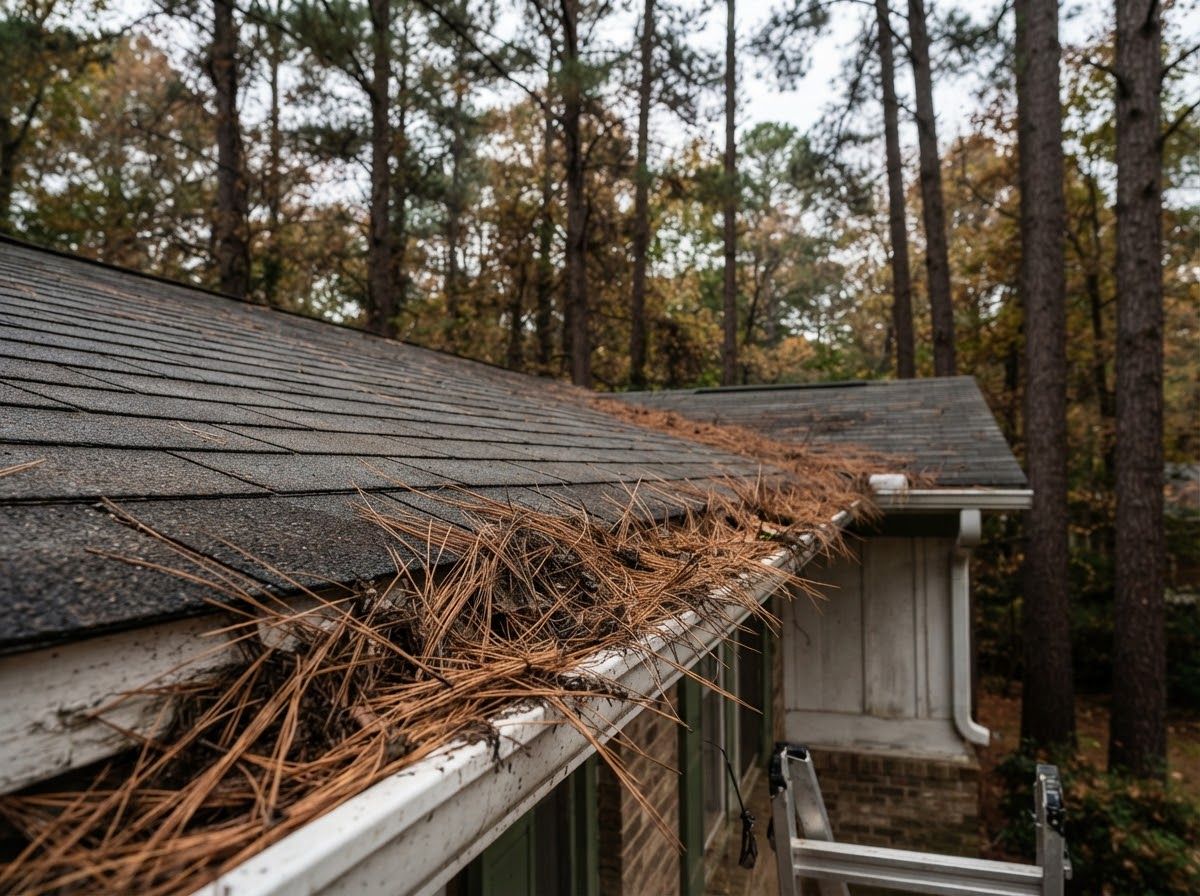
The most thorough independent test is still Consumer Reports' 2010 trial: 19 guards, 16 months outdoors, 10,000 gallons of water and a mix of maple leaves and pine needles. It didn't publish a needle-only result, so read the needle column as the best evidence available, not the last word. Consumers' Checkbook, for its part, warns that guards in general do little against pine needles.
| Design | How it works | Needles and debris | Heavy rain | Upkeep |
|---|---|---|---|---|
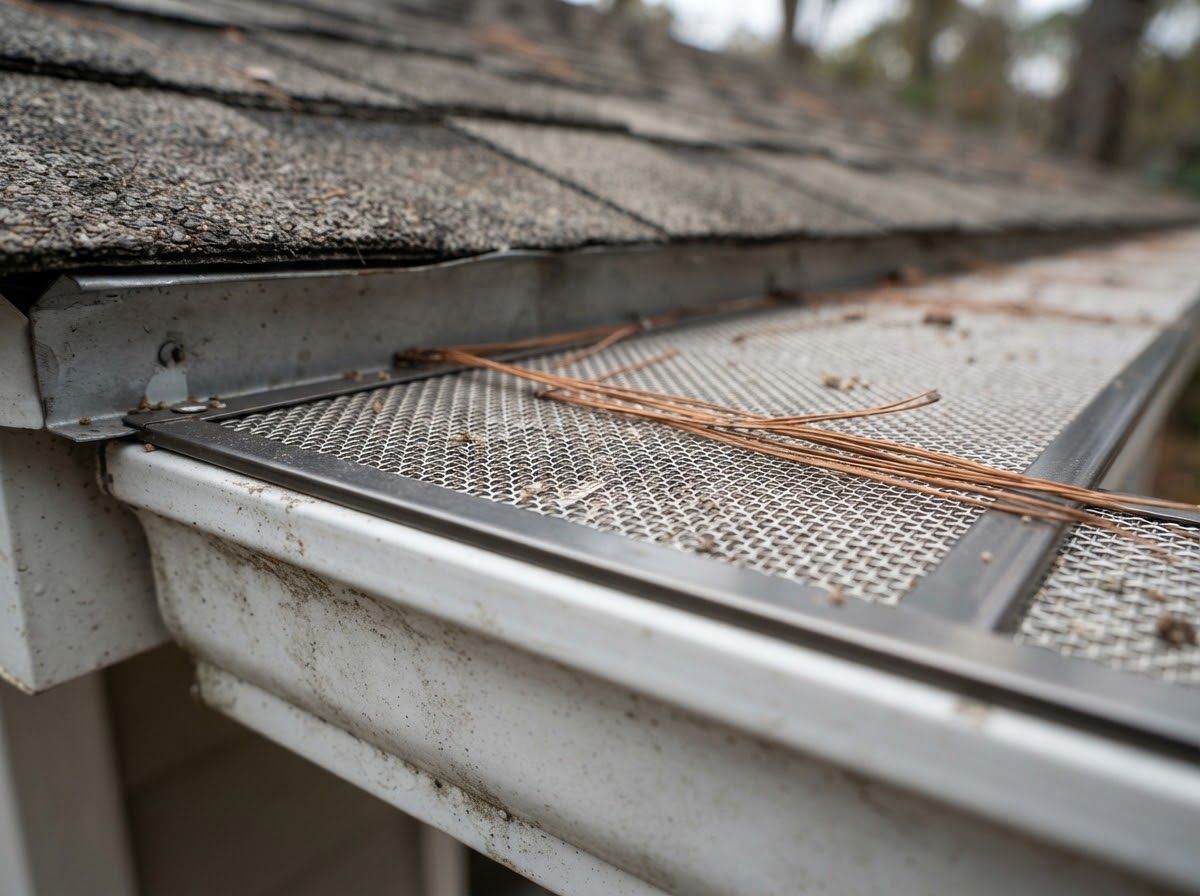
| Micro-mesh | A fine stainless or aluminum mesh over the gutter, often on a frame. | Fine mesh kept out more debris than screens with bigger holes in Consumer Reports' test. | Results split: the top pro mesh rated only middling in a severe downpour, while a do-it-yourself fine mesh rated excellent. | Brush off once or twice a year, more where pollen is heavy. |
| Screen or perforated cover | Metal or plastic with larger openings, clipped over the gutter. | Thin needles can slip through or wedge in the holes. | The best do-it-yourself screens rated excellent in both heavy and severe rain. | Check for wedged needles and seeds. |
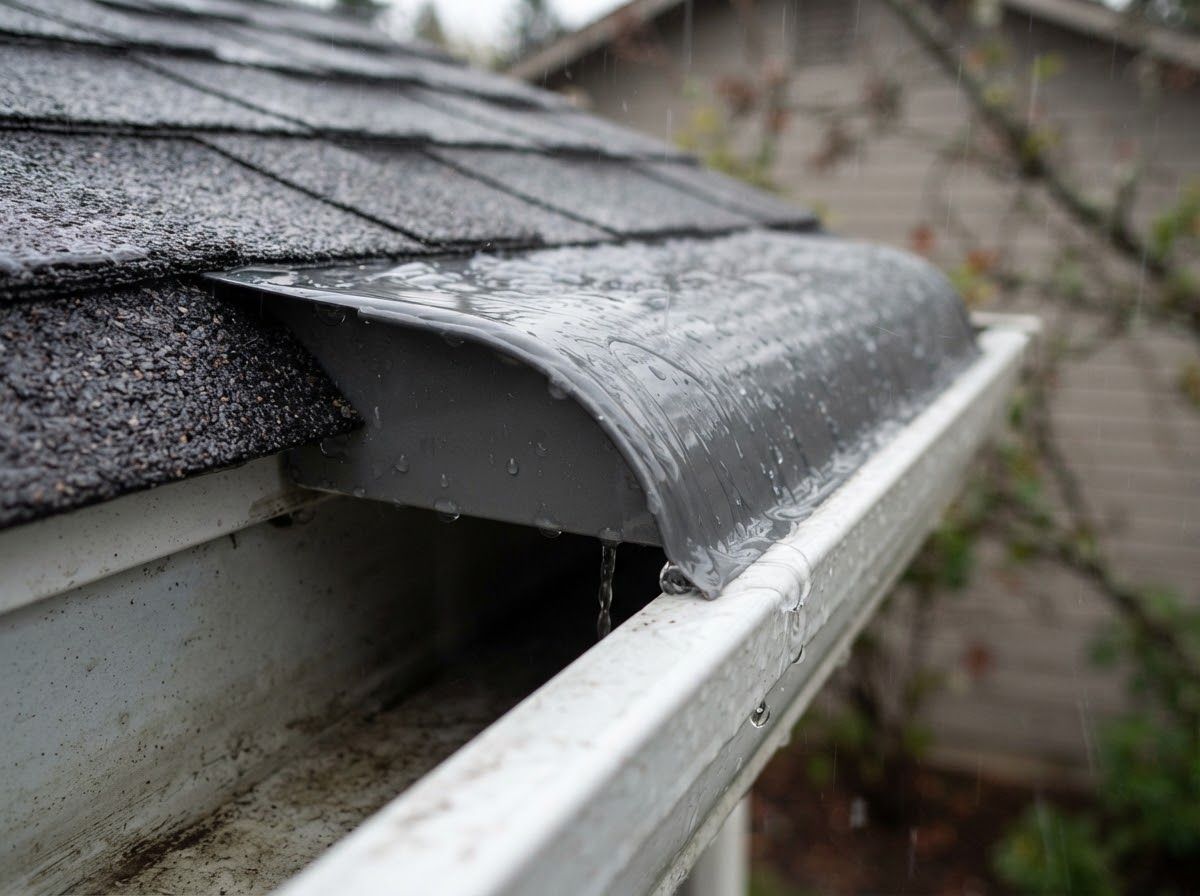
| Reverse-curve hood | A solid cover; water clings to the curved nose and runs in through a slot. | Pro-installed hoods shed debris well in the same test. | Rated good at best in severe rain, and one let heavy rain pour over. | Keep the nose and the slot clear. |
| Brush insert | A long bottle brush laid inside the gutter. | None of the inserts tested were good at keeping debris out. | Not separately reported for inserts. | Lift out and clean. |
| Foam insert | A foam block that fills the gutter. | Scored near the bottom with the brushes. | Not separately reported for inserts. | Lift out and clean. |
Pine needles, oak tassels and sweetgum balls by season are on the gutter guard service page.
What counts as micro-mesh
There's no standard opening size, and sellers quote very different numbers. One stainless mesh lists 540-micron openings, about 30 holes per inch each way. Englert's MicroGuard is a sheet of aluminum with more than 2,000 tiny perforations per foot. Both get called micro-mesh.
So ask for the opening size as a number. Two guards both sold as micro-mesh can differ a lot.
Overflow risk by type
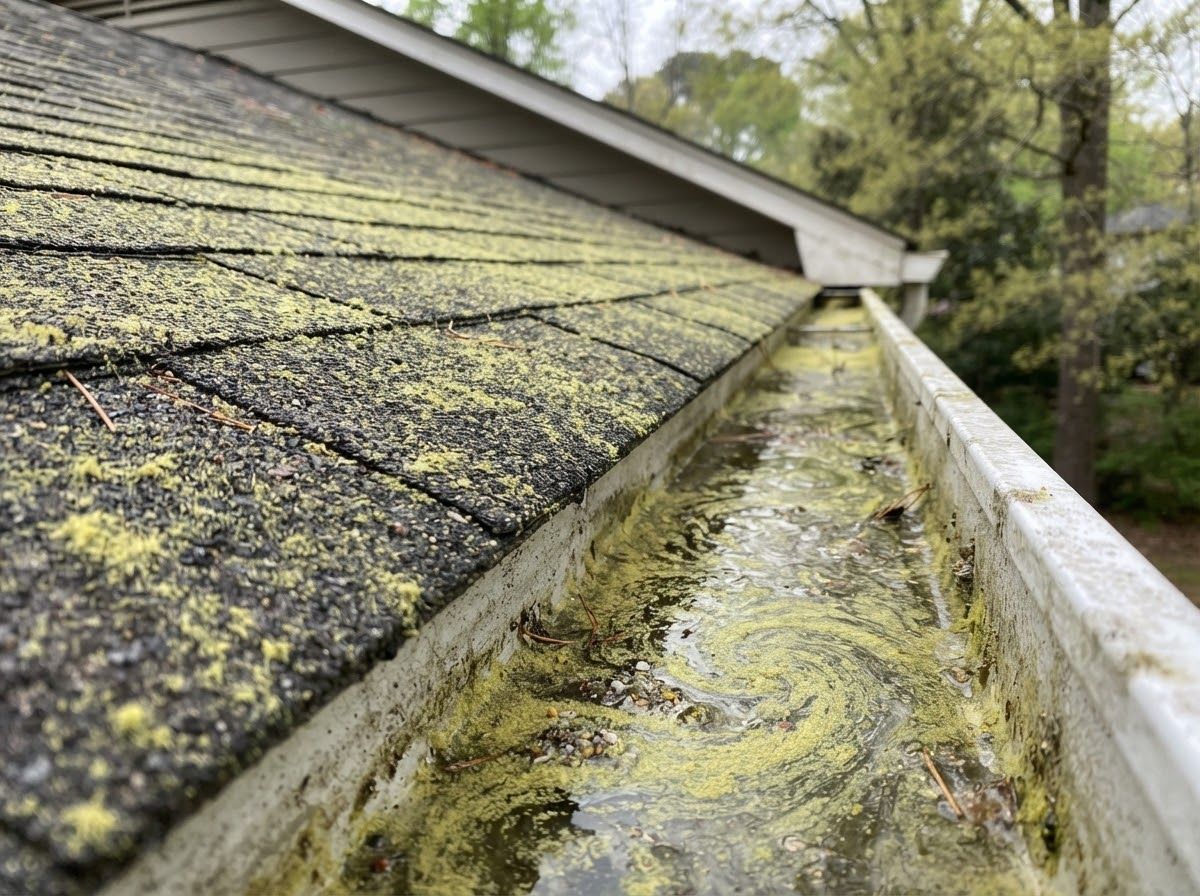
Consumer Reports defined a severe downpour as 6 to 7.5 inches an hour, and Atlanta's hardest summer bursts reach the top of that band. At those rates the pro-installed systems, one fine mesh and several hoods, rated middling to good, while the best do-it-yourself guards, screens and a fine mesh among them, rated excellent.
Installation moves the result as much as the design. One stainless-mesh maker tells installers to flatten the guard to 5 to 10 degrees on roofs pitched 8-in-12 or steeper, and notes that inside corners can spill in heavy flow unless they get high-flow miters. A gutter too small for its roof spills with or without a guard, so the gutter size guide is worth a look first.
Lifespan by type
No independent study tracks how long guards last, design by design. Warranties are the closest guide, and makers publish them for the metal guards.
The inserts carry the least. Foam and brush sit inside the gutter, wet, and Consumer Reports already ranked them last for keeping debris out. What still needs cleaning with a guard on is covered on the gutter guard page.
| Guard | Published warranty |
|---|---|
| Stainless steel micro-mesh (Raptor) | 30-year limited warranty on defects, transferable |
| Aluminum guard (Amerimax Titan 3000) | 20-year performance warranty |
| Powder-coated steel guard (Amerimax Hoover Dam) | 15-year limited warranty |
| Powder-coated steel mesh (Amerimax Lock-In) | 10-year limited warranty |
Brands, sorted by design
Where each brand fits, from Consumer Reports' 2010 ratings table and the makers' own documents. We're not affiliated with any of them, and none of them are linked.
| Brand | Design | How it is sold | Affiliation with this site |
|---|---|---|---|
| LeafFilter | Fine mesh screen | Dealer-installed | None |
| LeafGuard | One-piece gutter with a built-in hood | Dealer-installed | None |
| Gutter Helmet | Reverse-curve hood | Dealer-installed | None |
| Gutterglove Pro | Fine mesh | Do-it-yourself in the 2010 test | None |
| Raptor | Stainless micro-mesh, made by Gutterglove | Do-it-yourself, sold on Amazon | None |
| Englert MicroGuard | Micro-perforated aluminum | Through installers | None |
| GutterBrush | Brush insert | Do-it-yourself | None |
| GutterFill | Foam insert | Do-it-yourself | None |
Once you've narrowed it to a design, the visit shows how it would sit on your own gutters.
Call {{TODO: phone}}Questions to ask before a guard goes on
Whichever design you pick, the answers to these decide how it works on your roof.
- How does it attach? To the front lip, under the first row of shingles or to the fascia. Consumer Reports advises checking that a guard won't void a roof or gutter warranty, and the attachment is what decides that.
- What angle will it sit at, and what happens at the inside corners? On a steep roof both change how much water gets past in a downpour, as the overflow section above explains.
- Are the gutters cleaned and checked first? A guard goes onto a clean gutter with sound hangers and the right slope. A guard laid over a sag or a clog hides it.
- What kind of warranty is it? The table above mixes defect warranties and performance warranties, so ask which kind yours is and what it covers.
- What upkeep will it need under these trees? No guard ends it; the upkeep column in the first table shows what each design asks for.


Questions about guard brands
What each tier costs is in the gutter cost guide.
Which brands use micro-mesh?
What is the difference between LeafFilter and LeafGuard?
Which trees hang over the roof, and how steep is it? Those are the first two things we'll ask, and between them they usually leave one design standing.