Sagging or Leaking? Gutter Repair in Atlanta
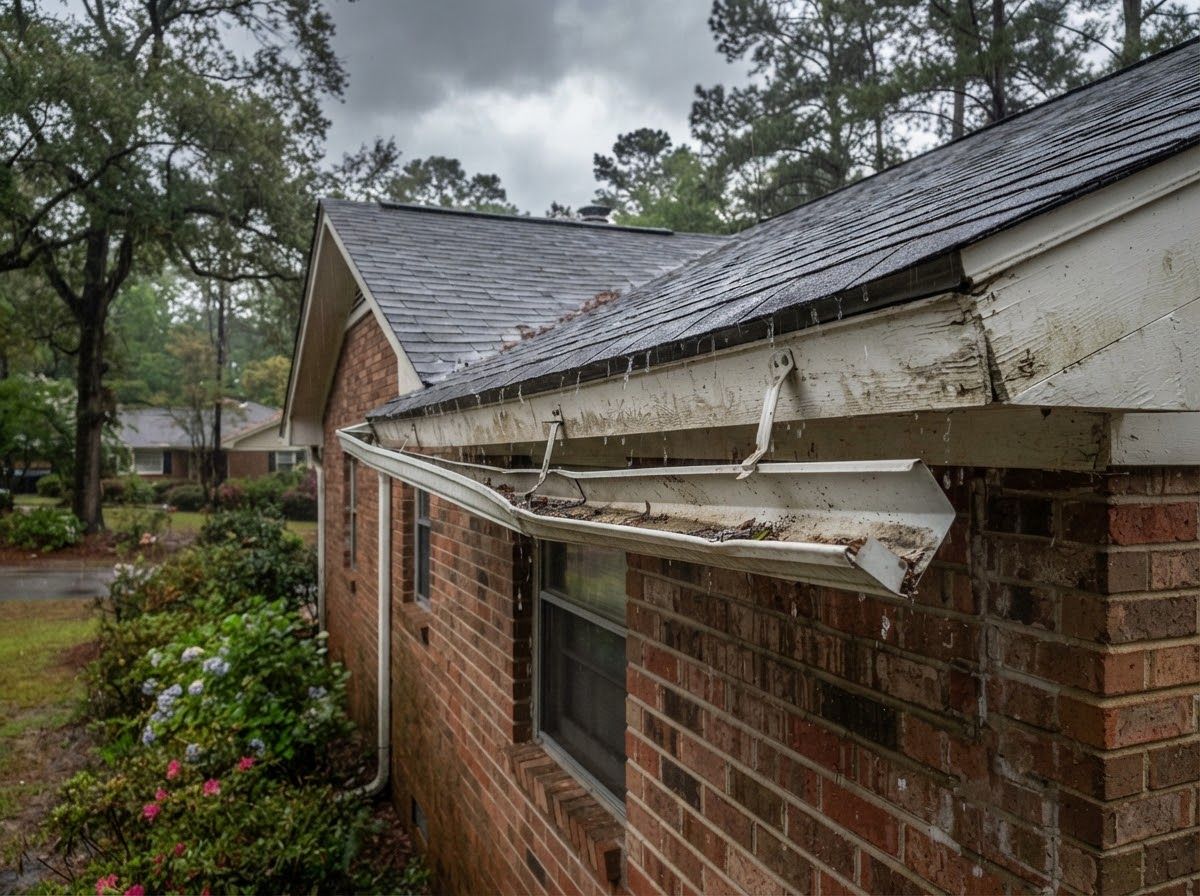
A gutter that sags or pulls away usually has loose fasteners or soft wood behind it. The installer finds out which before anything gets rehung.
Why your gutter is pulling away from the house
It comes down to a short list of causes. On any repair you book with Decatur Spout, ask the installer to rule these out first.
Spikes backing out
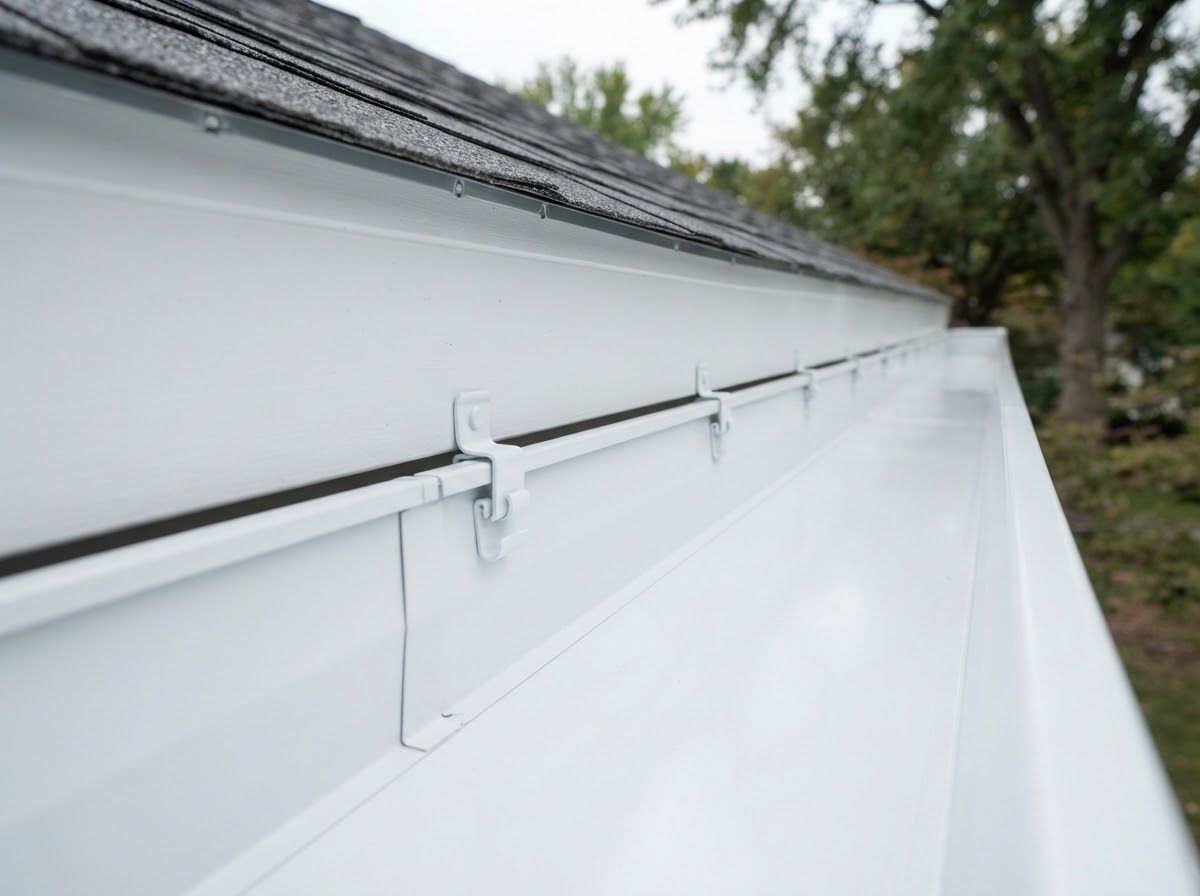
A spike passes through the gutter and a sleeve called a ferrule into the fascia, held by friction alone. Heat and wet weight walk it back out over the years, which is why manufacturers now sell screwed hidden hangers that resist loosening.
Hangers spaced too far apart
Manufacturer specs call for a hanger at least every 24 inches. With fewer, the run bends between them once it fills with wet needles and water.
A run that holds water
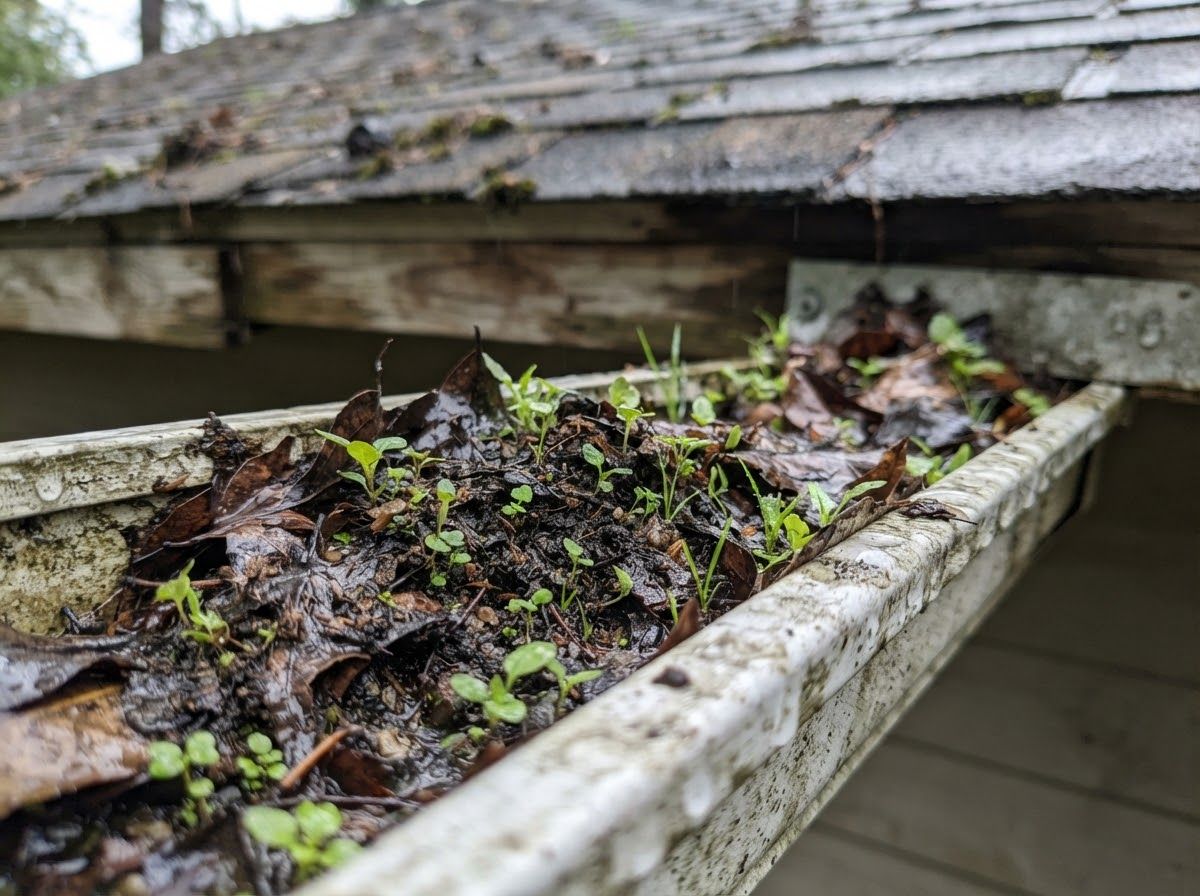
A gutter should fall at least a quarter inch every 10 feet toward its downspout. A level run, or one tipped the wrong way, keeps water standing in it, and water is heavy.
Soft wood behind it
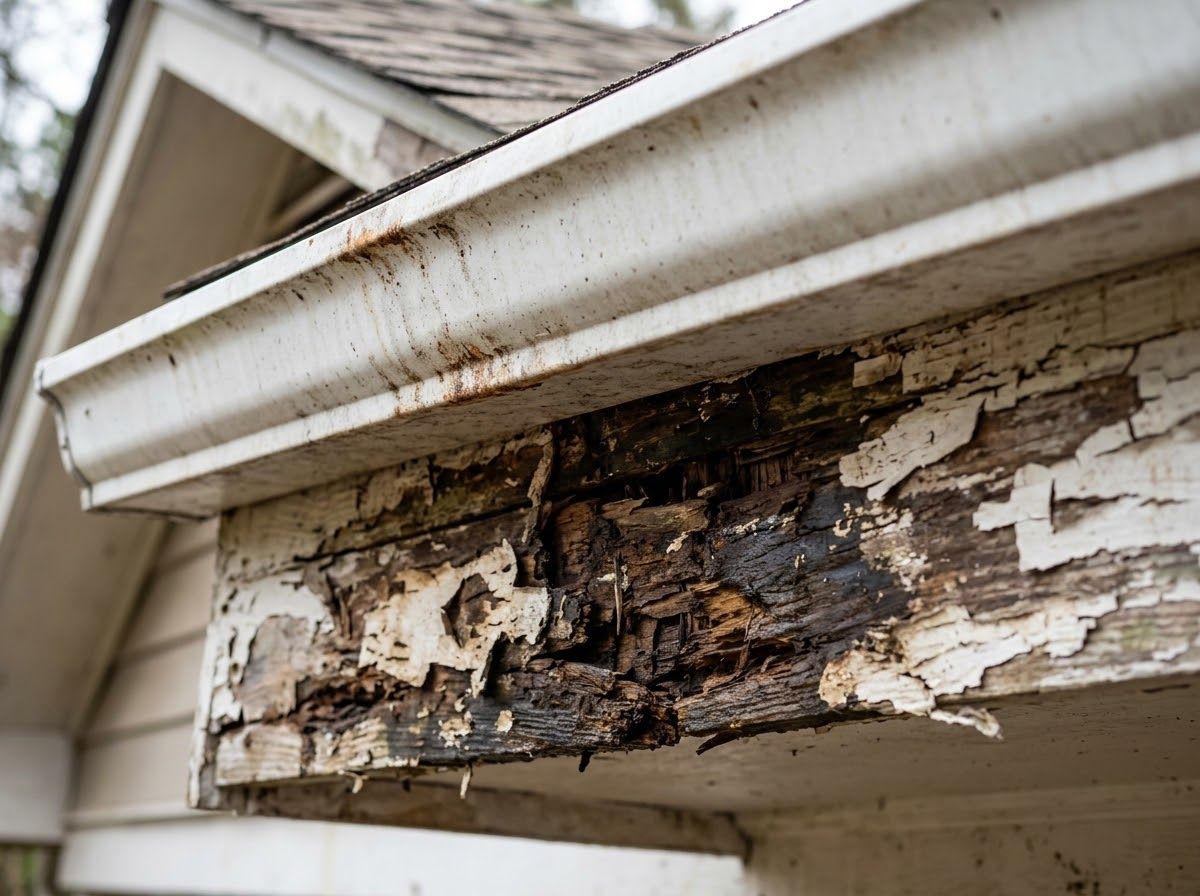
Fasteners only hold as well as the board they go into. If the fascia has rotted, that board gets replaced first.
A ladder leaned on it
Gutters aren't built to take a ladder. One climb can bend a hanger or crush the front lip, and both are small repairs.
The fix that lasts is usually new hangers in solid wood, spaced right, with the run sloped toward the downspout.
Leaking seams and corners
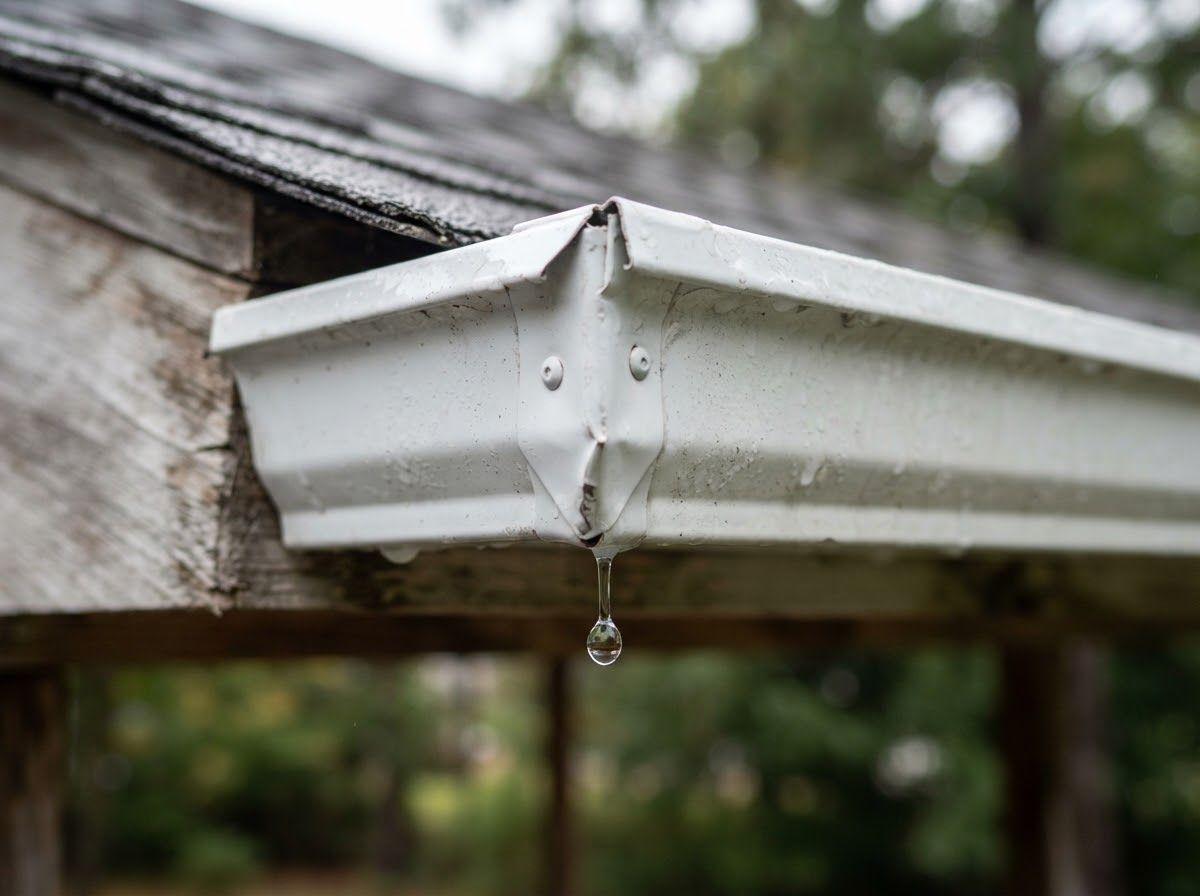
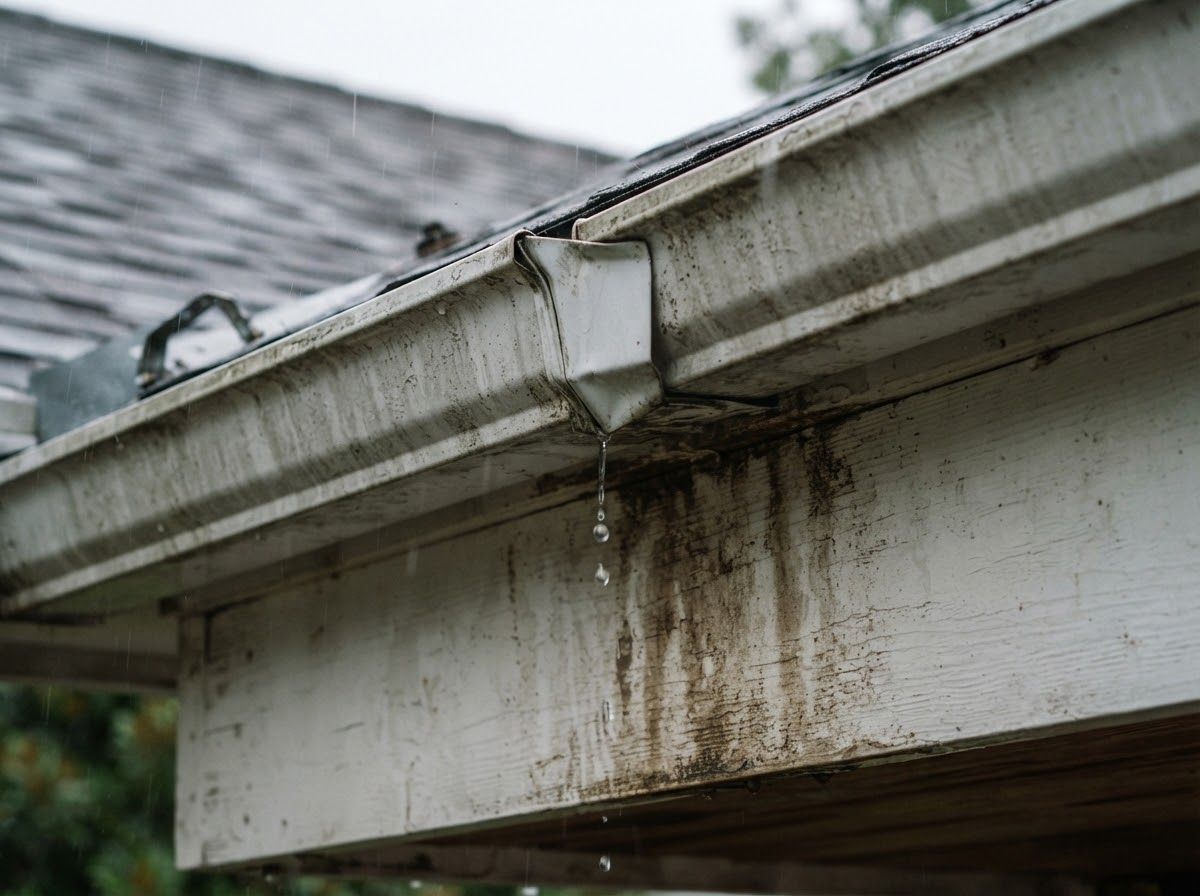
Drips start where one piece of metal meets another. Watch where the water falls in the next rain, or look for dirty streaks on the siding below.
Water running down behind the gutter is a different problem. It's getting past the back edge, which points to the drip edge and the fascia.
- Corners
- Corners are joined with a box, strip or bay miter and sealed. A dripping one gets cleaned and resealed, or re-mitered if the miter itself is bent or split.
- Joints on sectional gutters
- Gutters bought in lengths are joined with slip connectors and sealant. Every joint can start to drip as the sealant ages.
- End caps
- A cap crimped and sealed when it went on can work loose. Resealing usually fixes it.
- Outlets
- Where the gutter drains into the downspout, the joint carries the most water on the run, and a clog in the elbow below backs water up into it.
- Holes and rust spots
- Old steel gutters rust through from the inside where debris sat wet. Small holes can be patched.
Gutter fell or is hanging?
Keep people out from under it. Before it goes back up, the fascia it tore out of and the roof edge above get checked. The storm damage page has the rest of the first hour.
When repairing stops making sense
Repairs pay off on a system that's otherwise sound. Once the same run has been rehung twice, the joints drip in several places or the metal is rusting along its length, patching keeps costing money without fixing the cause. The gutter replacement page has the signs that decide it.
Not sure which side of that line yours are on? The visit settles it.
Call {{TODO: phone}}Questions about gutter repairs
Can a sagging gutter be re-hung?
Is the wood behind it rotten?
How long does a repair take?
Say where it drips or sags, like a front corner or the run over the back door, so the visit starts in the right spot.