Overflowing in Heavy Rain? Downspout Repair in Atlanta
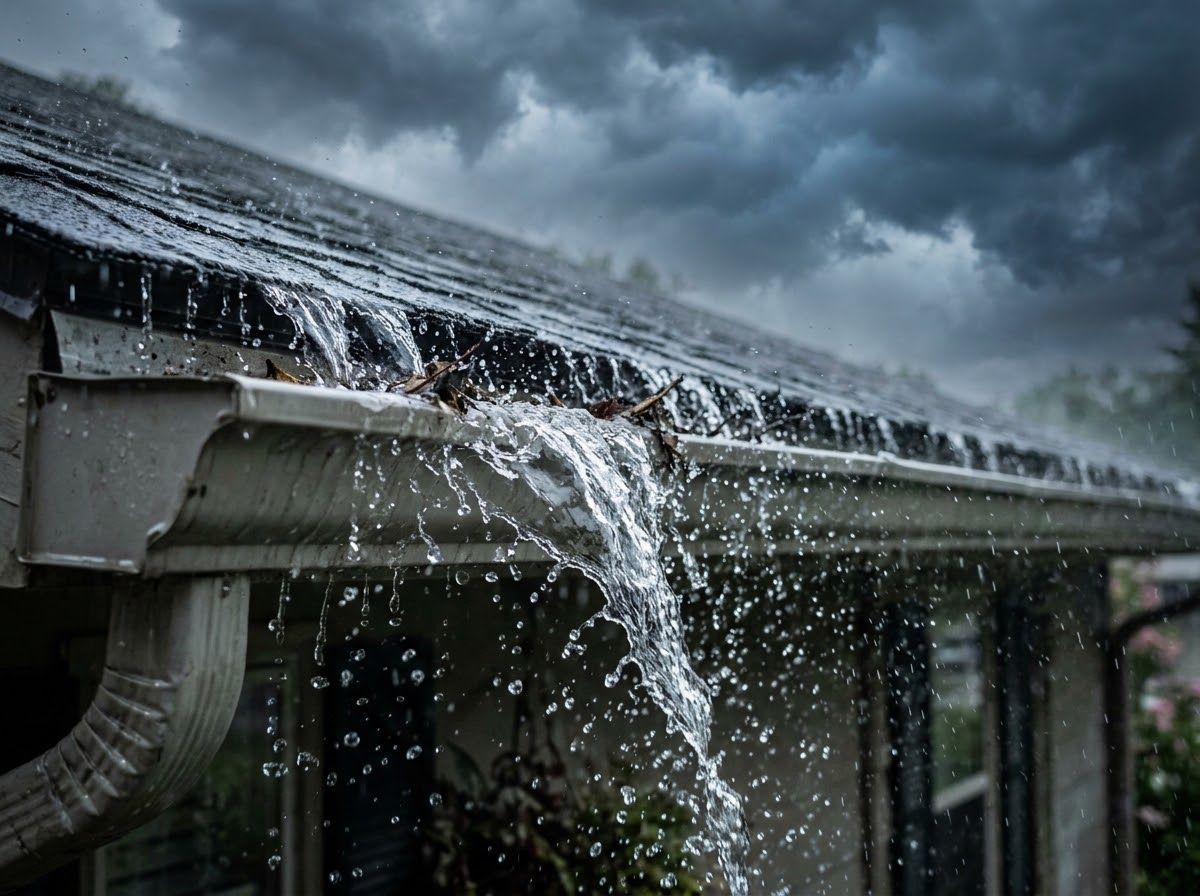
Water spilling over the gutter edge lands right beside the foundation. The outlets and downspouts get checked first.
Why gutters overflow when it pours
Atlanta averages about 15 days a year with an inch of rain or more, and those are the days a weak spot shows. Where the water spills points to the cause, and every fix in the table is one Decatur Spout can line up. Spills that come from too little capacity are covered in the gutter size guide; the ones that come from debris, on the gutter cleaning page.
| Where it spills | Likely cause | The fix |
|---|---|---|
| Spills at one spot near the downspout | A clog at the outlet or in the first elbow | Clear it, then look at why it collects there: needles, shingle grit, a guard that lets debris in. |
| Water leaks from the downspout joints low on the wall | The buried drain line is blocked or crushed | Clear or replace the buried line; the downspout itself may be fine. |
| Spills along the whole run, only in the hardest rain | More roof than the downspouts can drain | Add a downspout or go to 3x4. |
| Spills at the far end from the downspout | The run is level or tips the wrong way | Rehang the run with a steady fall toward the outlet. |
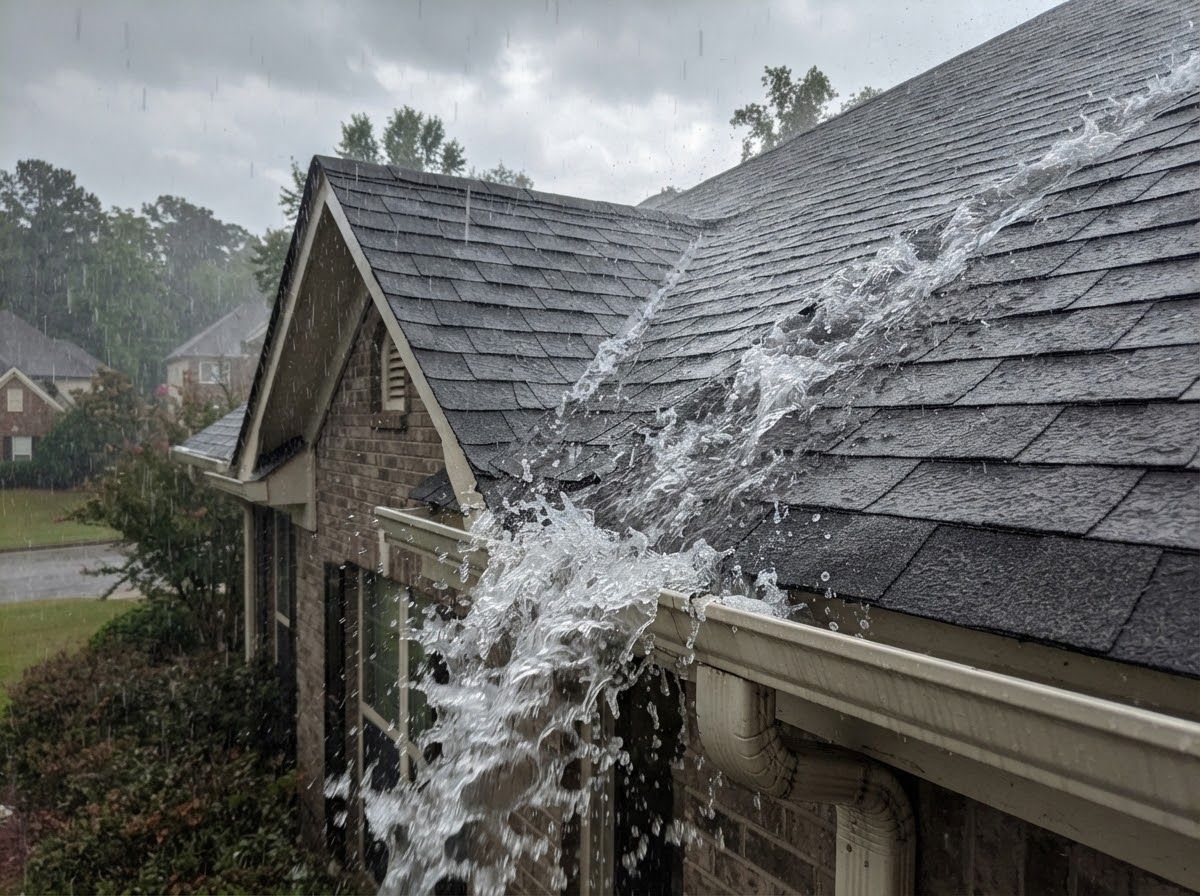
| Spills at an inside corner below a roof valley | The valley pours a concentrated stream into one spot | A larger gutter there, a downspout near the corner, or a splash guard at the valley. |
Clogged downspout or clogged underground drain?
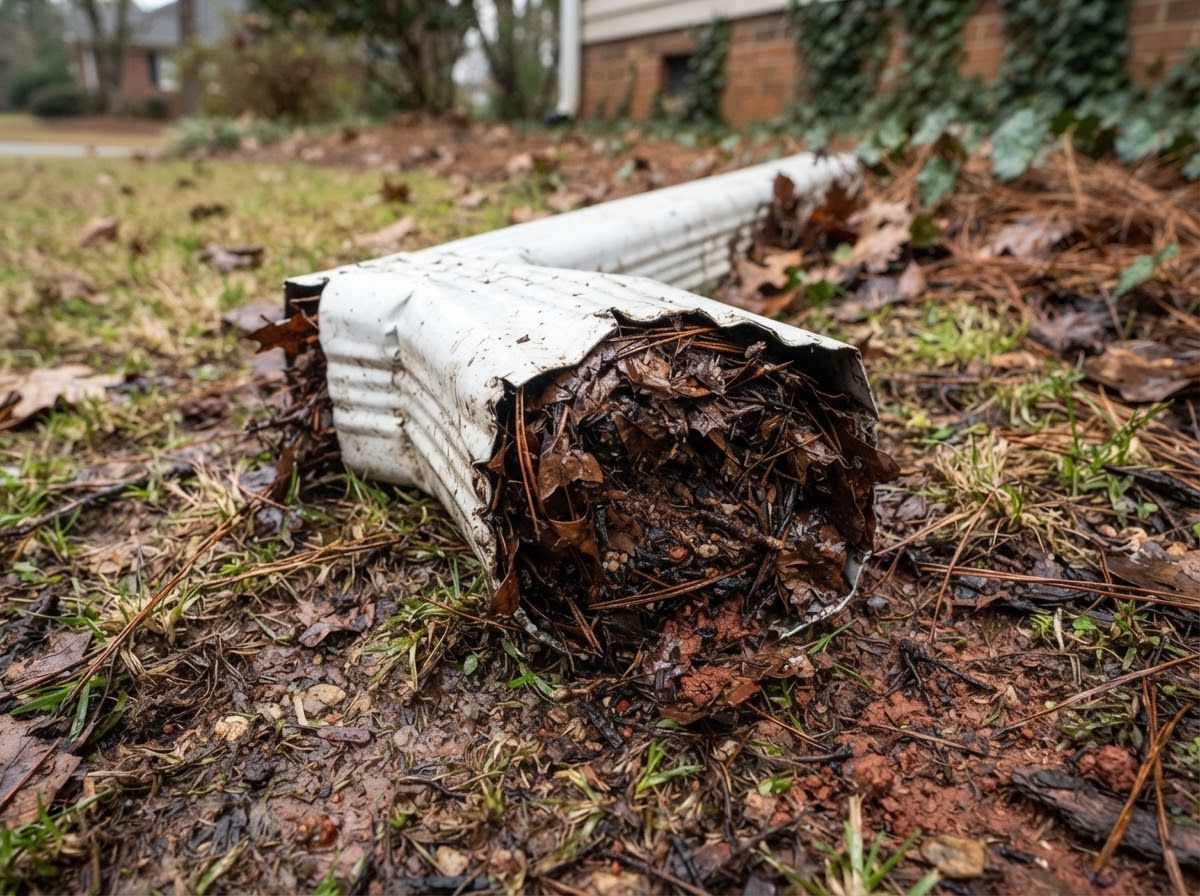
Some downspouts empty into a pipe buried in the yard. If the gutter fills while the downspout above ground is clear, the clog is usually below ground.
Leaves and grit settle in the pipe, roots can find the joints, and a shallow line can get crushed under a car. A leaf grate where the downspout enters the pipe keeps the worst of it out, and one maker sells them to fit 2x3, 3x4 and round downspouts.
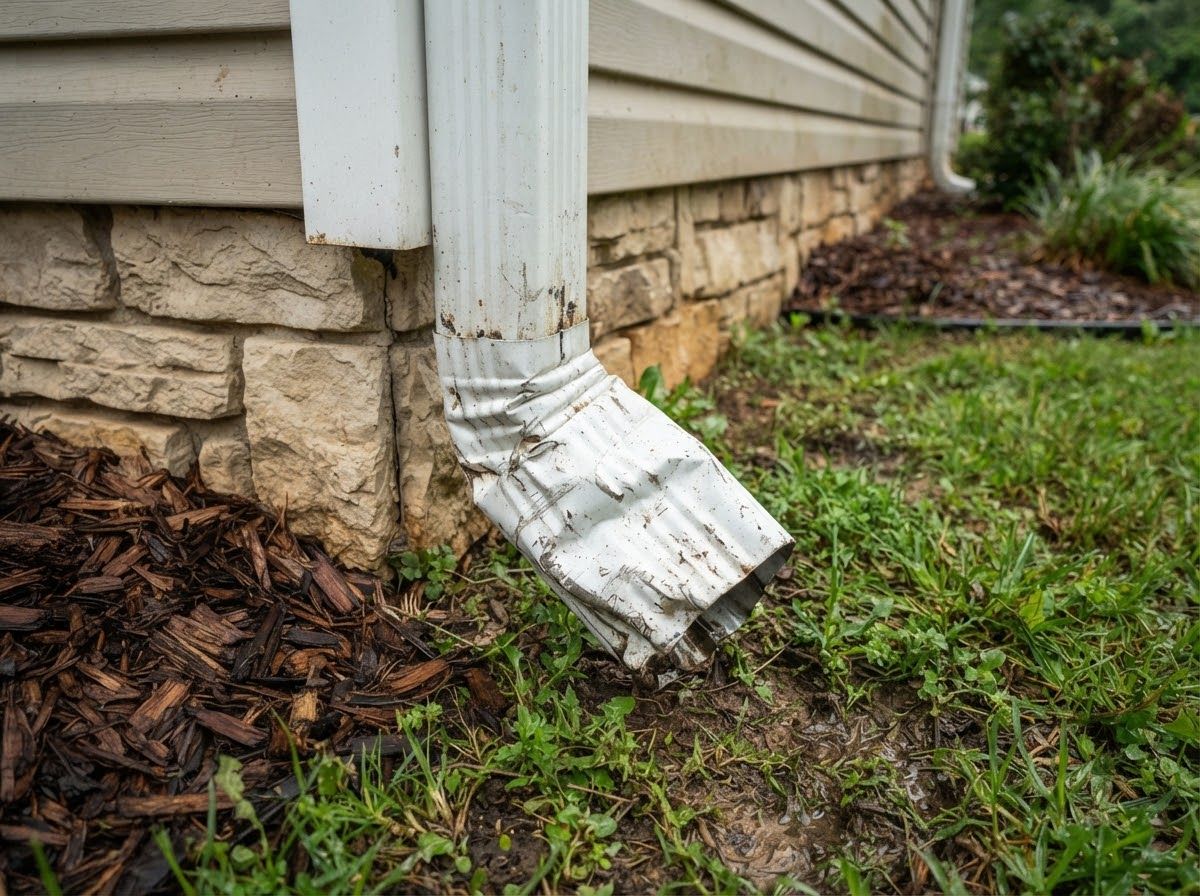
In a hard rain, look at the bottom of the downspout. If water backs up and leaks from the joints near the ground, the buried line isn't taking it.
Less debris in the gutters means less going down the pipe, and the gutter guard page covers which guards suit which trees.
Where downspout water should land
An inch of rain on a 2,000-square-foot roof is about 1,250 gallons, and all of it leaves through the downspouts. Five feet from the foundation is the usual target. The downspout guide on the EPA's stormwater site and Consumer Reports both use it, and so does the residential code where expansive soils are a concern. The code also wants the ground to fall at least 6 inches in the first 10 feet, so the water keeps moving. Water pounding one spot of bare clay breaks the surface apart and seals it, so the next rain runs off instead of soaking in. Rain barrels and running water to the street are covered on the gutter questions page.
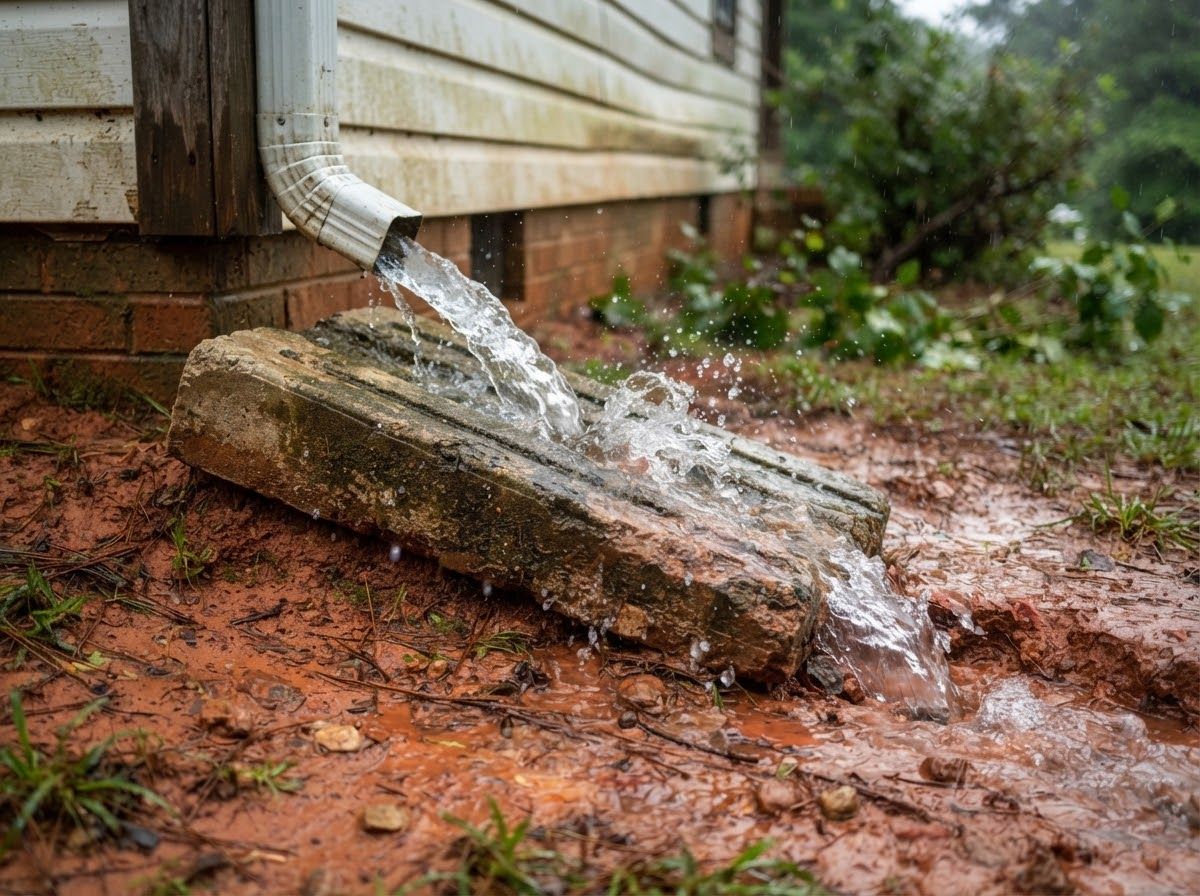
Splash block
A concrete or plastic trough under the elbow. It spreads the water but keeps it near the wall.
Extension
A length of downspout run across the ground. It carries the water farther out and can hinge up for mowing.
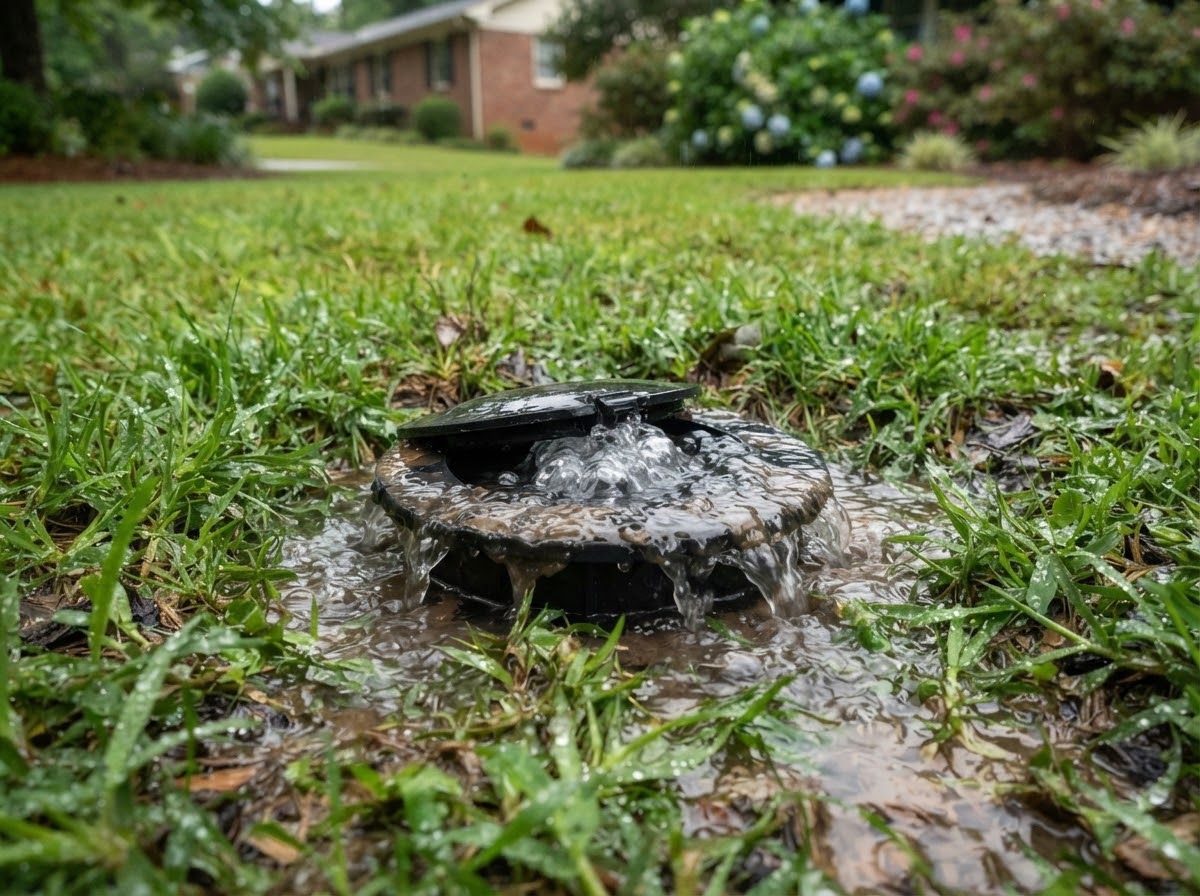
Buried line
A pipe under the lawn to a pop-up emitter or lower ground. Out of the way, but it has to be kept clear.
Water still standing by the foundation after the rain stops? Sort out where it should go on one visit.
Call {{TODO: phone}}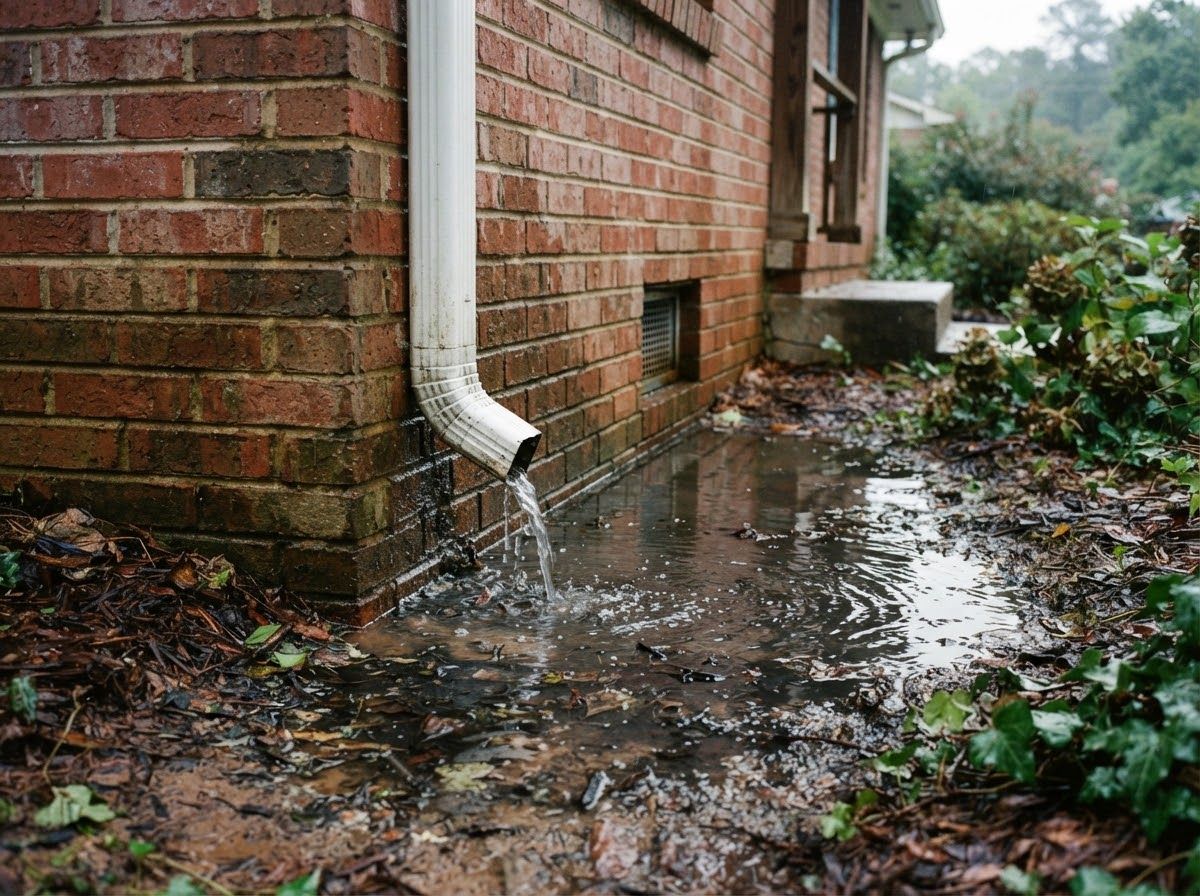
Questions about downspouts
Do I need a second downspout?
2x3 or 3x4 downspouts?
Can you clear a buried drain line?
Spilling at one corner or along the whole run? Your answer on the call tells the installer whether to clear a clog or add a downspout.