An Atlanta Gutter Calendar, Month by Month
About 3 to 5 inches of rain falls here every month. What shifts through the year is what the trees drop and which storms roll through.
Rain falls in every month here
NOAA's 1991-2020 normals for the Atlanta airport put the driest month, October, at 3.28 inches and the wettest, July, at 4.75. Winter, December through February, comes out wettest of the four seasons by a fraction of an inch. There's no dry season when a full gutter can wait. Decatur Spout plans gutter visits around the load each month brings, set out below.
| Month | Normal rain | Thunderstorm days | Coming down | Worth doing |
|---|---|---|---|---|
| January | 4.59 in | 1.1 | Sweetgum balls | After an ice storm, a look from the ground for a run pulling off the fascia. |
| February | 4.55 in | 1.9 | Sweetgum balls; pine pollen starts late in some years | Carpenter bees come out to mate, and squirrels start nesting. |
| March | 4.68 in | 3.6 | Pine pollen, oak tassels, sweetgum balls | Carpenter bees bore new nests in bare wood at the eaves. |
| April | 3.81 in | 4.2 | Pollen at its heaviest, oak tassels | Pollen and tassels settling at the outlets after each rain. |
| May | 3.56 in | 6.0 | The last of the pollen | The late-spring cleaning, once the tassels are down. |
| June | 4.54 in | 8.6 | Light | Note where water spills in a downpour; on a clean gutter, that is where capacity runs short. |
| July | 4.75 in | 10.3 | Light | The wettest month and the most thunderstorms. Overflow on a clean gutter points to size. |
| August | 4.30 in | 8.0 | The first old pine needles | Carpenter bee holes get plugged and painted; squirrels have a second litter. |
| September | 3.82 in | 3.1 | Pine needles, acorns | Tropical storm remnants: clear downspouts before one arrives. |
| October | 3.28 in | 1.0 | Pine needles, acorns, leaves | The driest month, and still remnant-storm season. |
| November | 3.98 in | 1.0 | The rest of the needles, leaves and acorns | The fall cleaning, after the drop and before winter rain. |
| December | 4.57 in | 0.7 | Sweetgum balls begin | Gumballs collect at the outlets through spring. |
Rain: NOAA normals for the Atlanta airport station. Thunderstorm days: National Weather Service averages, counted as days thunder was heard at the observing site.
Fall's drop goes into winter's rain
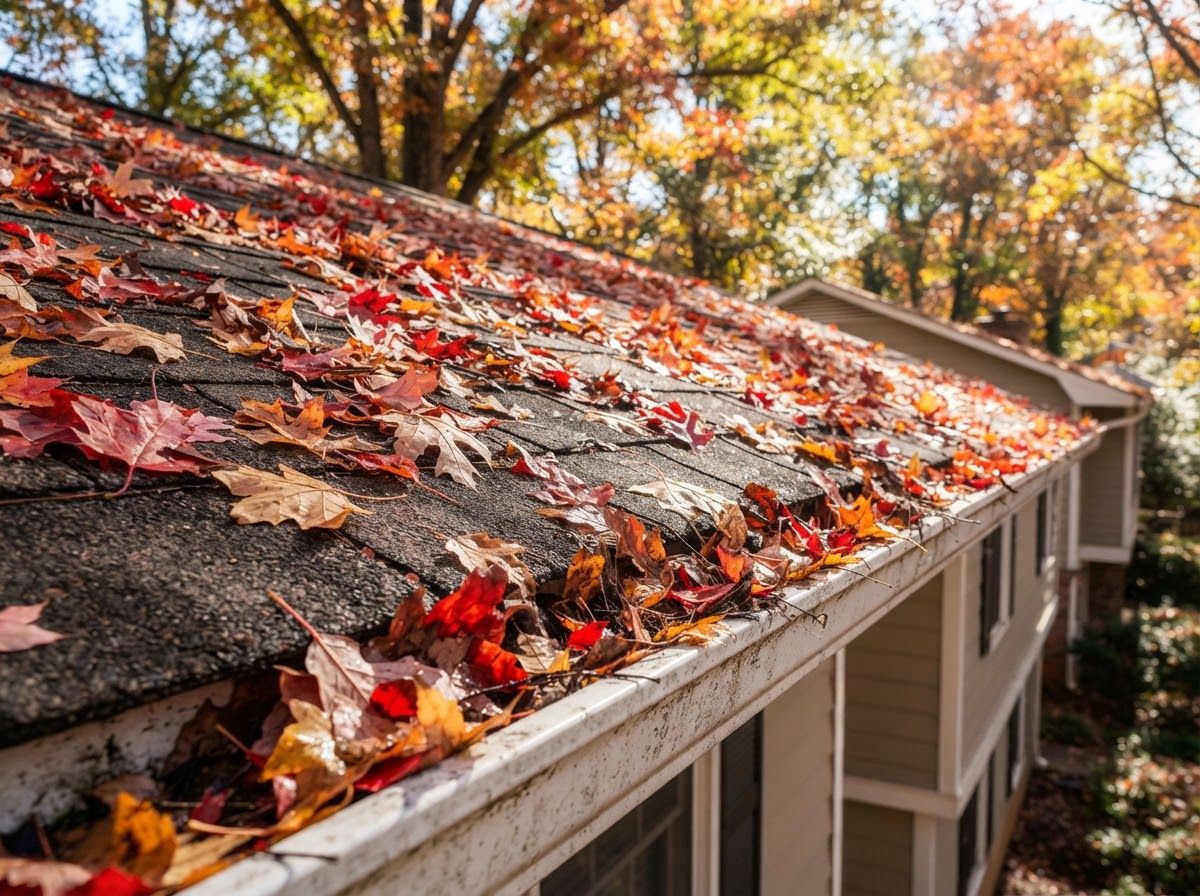
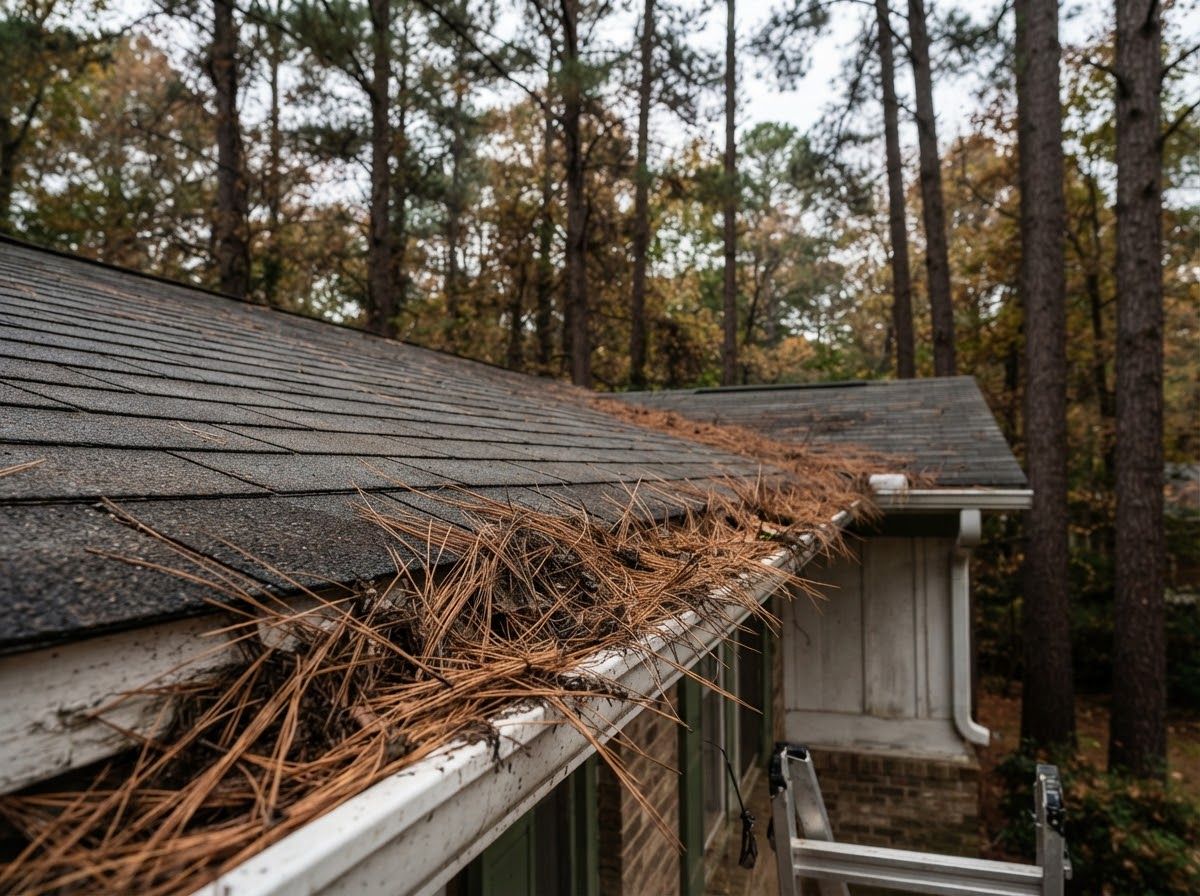
Pines shed most of their needles in fall, and acorns come down from September through November. A gutter under pines and oaks can be packed by late November, just before winter's rain. Gumballs then start falling on top of whatever is left, from December on.
That sequence is why the fall cleaning is the one not to skip, and why it's booked once the drop is done. Clear it in October and the gutters fill again before Christmas.
Summer storms test the size of the gutter
On about four days each summer, an inch or more of rain falls. A gutter that spills in a downpour with nothing in it is too small for the roof above it, or one downspout short. Valleys, where two roof slopes pour into one corner, are a common overflow spot in heavy rain.
The gutter size guide works out what your roof needs. Note where the water comes over during the next storm, and tell us when you call; it shows the visit where to measure first.

Spring loads the gutters with pollen and oak tassels
March through May brings the second debris season, lighter than fall's but finer, and the thunderstorms pick up as it goes.
Pine pollen
It flies from late February or early March into May, peaking in early to mid-April, and every rain rinses the yellow film off the roof and into the gutters. The gutter cleaning page has the timing for each kind of debris.
Oak tassels
The catkins come down in March and April, once the oaks finish flowering. They land in open gutters and on top of guards alike.
Carpenter bees
They start boring nests in March, and old, unpainted fascia is the kind of wood they pick. The fascia and soffit page covers what bored boards mean for the hangers.
Squirrels
February and March is nesting season. If one has chewed into the soffit, the opening gets closed only once the young are out.
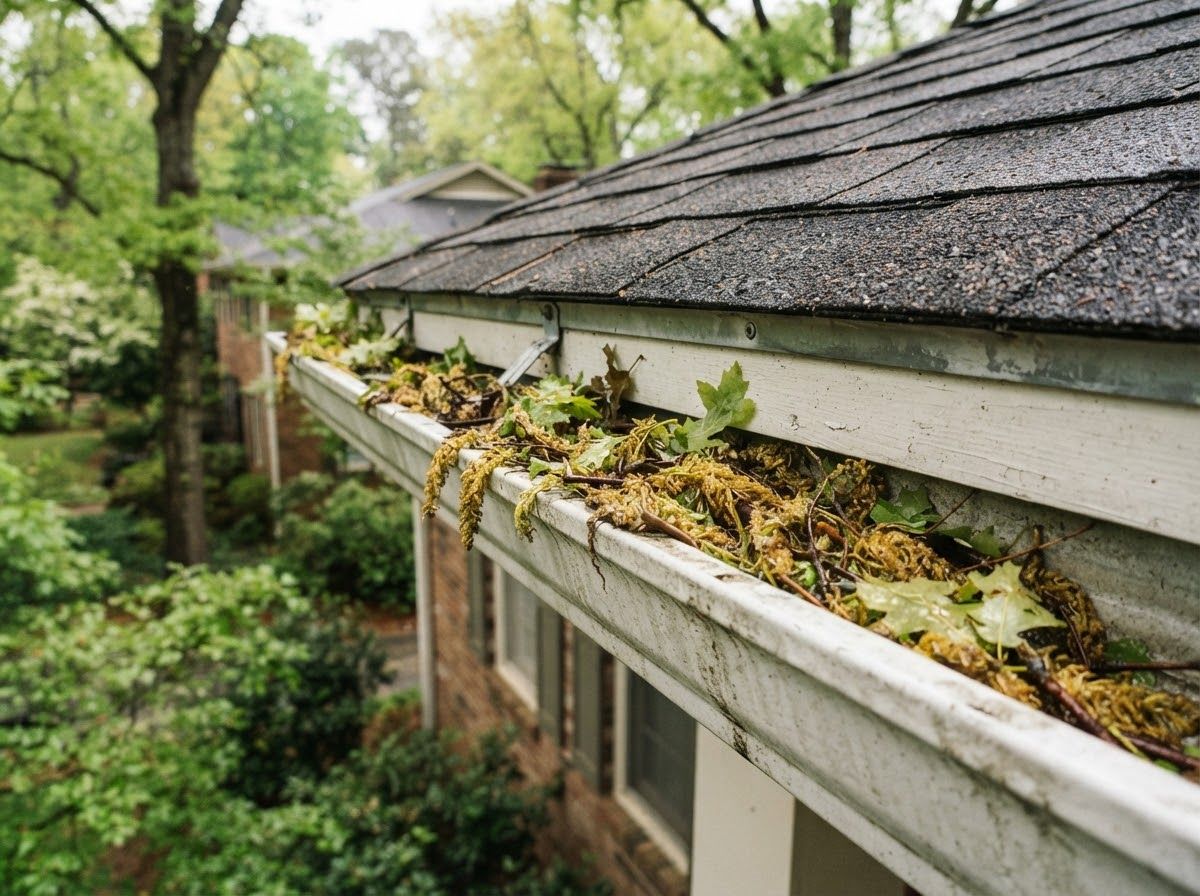
Outlets plugged with pollen and tassels by May? A late-spring cleaning clears them before thunderstorm season.
Call {{TODO: phone}}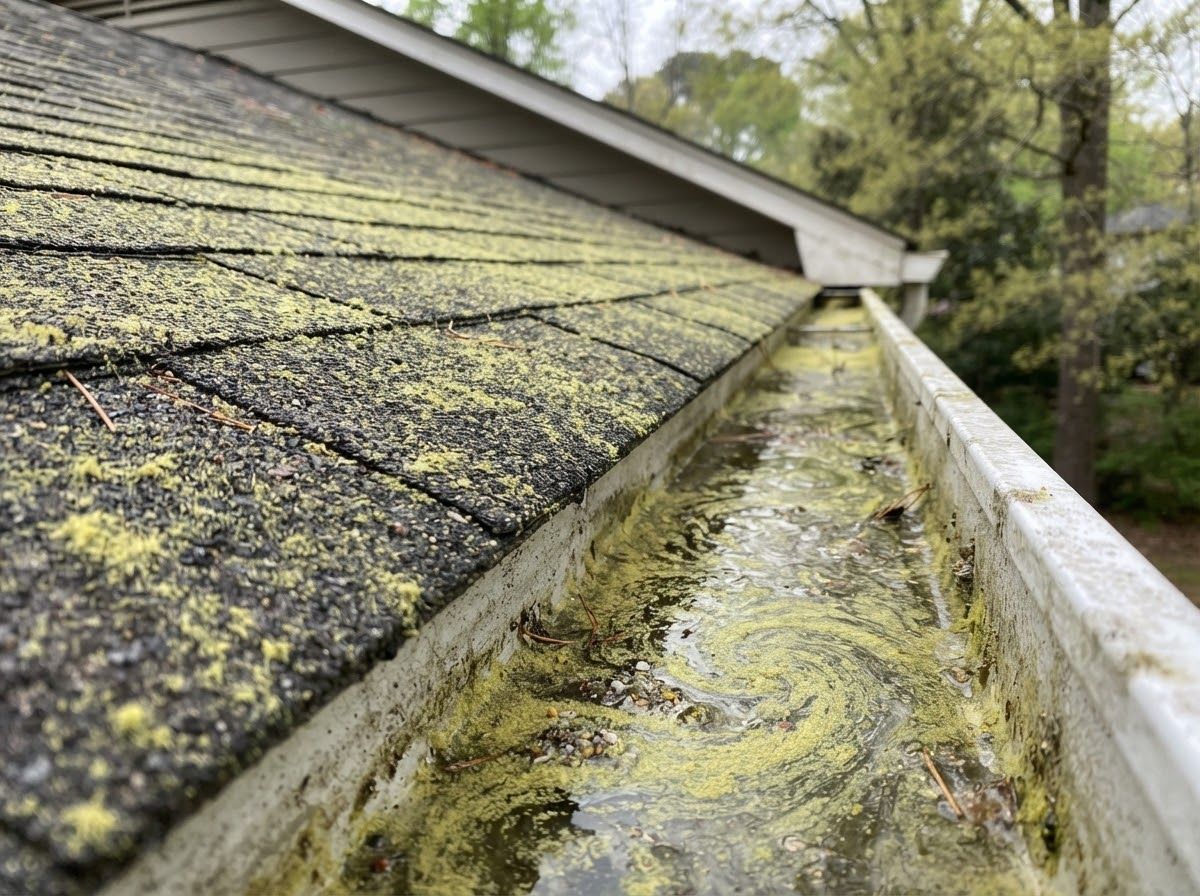
Tropical storm remnants come in September and October
Three of the storms that brought trees down on metro Atlanta houses in the past decade were tropical remnants, late in hurricane season. Irma's crossed on September 11, 2017, with gusts of 50 to 65 miles an hour, and the Weather Service recorded many trees falling on homes. Zeta followed in late October 2020 and Helene in late September 2024; the storm-damaged gutters page covers both.
Wind and falling limbs do most of the harm, and roofing contractors' national association notes that windblown debris clogs drains and downspouts as well. With one of these in the forecast, empty gutters and clear downspouts are the prep that helps.
Questions about the gutter year
The rest of the cleaning questions are on the gutter cleaning page.
When is the best time of year to clean gutters in Atlanta?
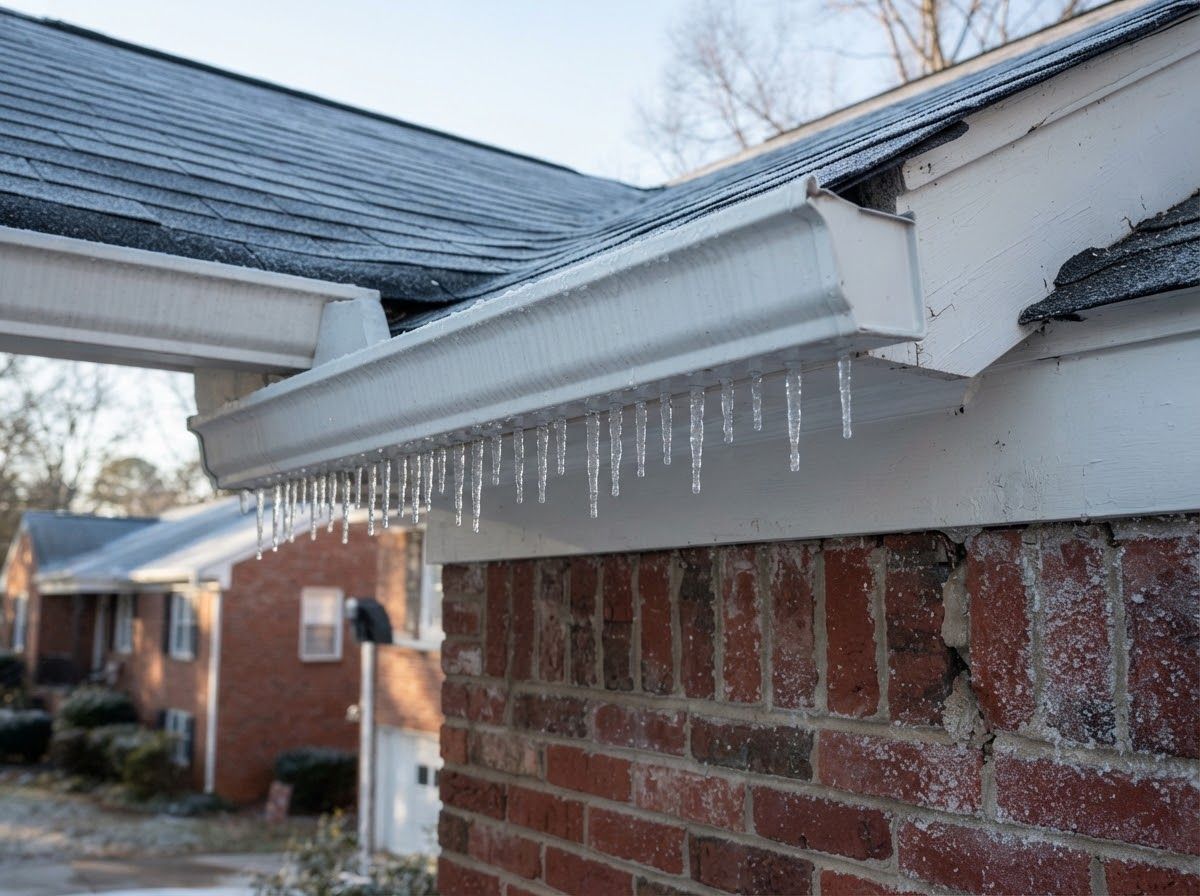
Do gutters ice up in Atlanta?
When should carpenter bee holes in the fascia be fixed?
Calling in the fall? We'll ask when the gutters were last emptied and whether the needles are down yet, and set the visit around that.